By, Belayet Hossen
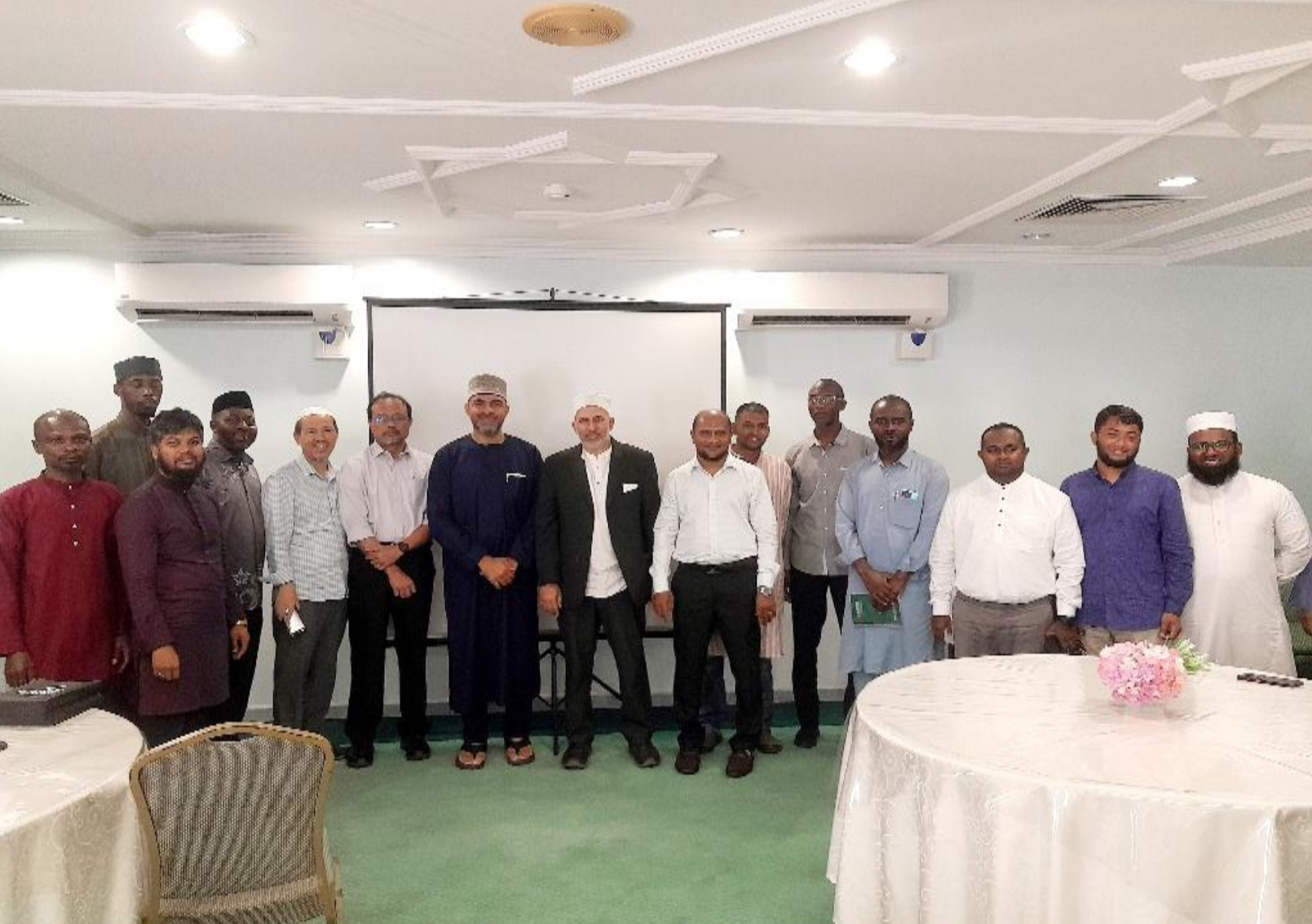
A thought-provoking scholarly discussion has been enjoyed by the IIUM community throughout an enlightening lecture, delivered by Sheikh Muhammad Nuruddin Lemu on “Triangulation in Ijtihad: Application of Maqāṣid al-Sharīʽah for Critical Thinking Professionals”, held on Friday, August 8, 2025, from 9:30 AM to 12 PM at Faculty Lounge, AHAS KIRKHS, IIUM.
The program was initiated by the welcoming remarks of Professor Dr. Mohamed El Tahir El Mesawi from the Department of Fiqh and Usūl al-Fiqh following the recitation of the holy Quran, recited by Abdul Karim, a PhD student, Department of Fiqh and Usūl al-Fiqh. During the speech, Muhamed El Tahir El Mesawi said that the issue of Maqāṣid al-Sharīʽah should be made easier and more accessible to all classes of people so that they can easily understand and integrate it with their respective branches of knowledge beyond the Sharīʽah studies.
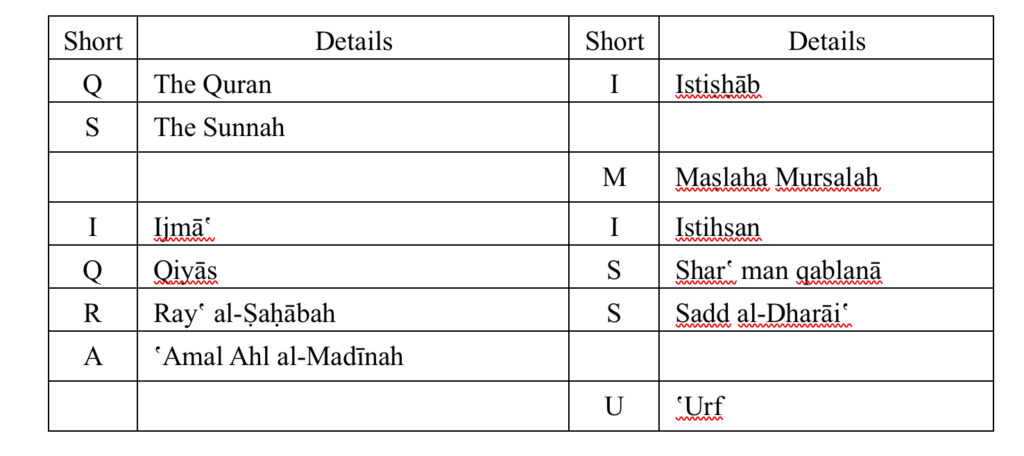
During the session Sheikh Muhammad Nuruddin Lemu said that Islamic Jurisprudence is not like mathematics, rather, it is changeable based on time, place and context. Its nature is universal and compatible with any situation and culture of any community or nation of the world. He said that when our scholars attempt to pursue ijtihad, they always should have a toolbox, where the following tools should be preserved like the knowledge of Usūl al-Fiqh, Maqāṣid al-Sharīʽah and Islamic Legal Maxim (qawāiʽd fiqhiyyah) etc. If their research is justified by these three criteria, then their ijtihad is correct. If any of the criteria is absent in justification of ijtihad, the ijtihad is incorrect. Although it is shown correctly, it is accidentally. To describe details the sources of Sharīʽah, Sheikh Nuruddin provided an acronym so that students or any individual interested to pursue ijtihad can easily remember and apply them during his exertion (ijtihad). The acronym has been stated in the following table:
Sheikh Nuruddin added that our scholars and muftis should cultivate a diverse range of knowledge, encompassing both transmitted (revealed) and intellectual (rational) sciences. This includes understanding Islamic texts alongside contemporary issues, social sciences, and other relevant fields, enabling them to offer relevant and nuanced guidance in a complex world. It may collectively assist them in ijtihad and production of right fatwa.
Furthermore, he said that our Muslim professionals and their contributions need to be recognized by our scholars and ʽulamāʼ. What they have achieved from knowledge, skills and experience that should be endorsed and certified. And it should be kept in mind that they are also contributing to mankind. In this case, what they are doing is not far from the arena of Maqāṣid al-Sharīʽah. All sorts of knowledge and skills are appreciated and endorsed by Islam as long as it is not used against Islam. Muslim professionals are like micro mujtahid. They are specialists and their specialization should be encouraged as well as welcomed by the scholars of our Ummah. We direly need specialists for each sector of our lives so that they can be Ahl al-Zikr (people of knowledge) regarding which Allah (swt) said:
﴿فاسْألوا أهْلَ ال ذكْرِّ إن كُنتمْ لََ تَ عْلمُو نَ﴾
So, ask the people of the knowledge if you do not know.
(Sūrah al-Naḥl, 16:43).
Our Ummah needs numerous specialists in each field so as to people can go to them when they need knowledge of any specific field. There are plentiful so-called ʽulamāʼ who are literally “jack of all trades, master of non”. When people approach them to have solution to any crisis they face, they are unable to provide fatwa professionally and perfectly. For example, our ʽulamāʼ should have knowledge concerning the waste management because it is also part of Islam. If the waste or garbage of our society is not removed and cleaned for a longer time, it could create a lot of germs around us. If the garbage is not cleaned on time, it may produce a lot of germs and other infectious diseases, which may affect the people of entire society. It means having the knowledge of waste management is also part of Islam and the Ummah’s ʽulamāʼ should have this kind of knowledge and skills so that they can properly guide the nation.
Additionally, Sheikh Nuruddin said that there are principles to pursue ijtihad for every specific field. The Quran contains the principles of every field of knowledge. If any scholar tries to pursue ijtihad without a clear and broad understanding of the context, he must make a mistake in it, which is considered as text without context is pretext, here pretext means deception. There are numerous parables of ʽulamāʼ who are giving fatwa out of context. Such problems are mostly found in case of local ʽulamāʼ, who do not possess profound understanding of Usūl alFiqh, Maqāṣid al-Sharīʽah, qawāiʽd fiqhiyyah and sources of Sharīʽah.
However, Sheikh Nuruddin described five categories of Sharīʽah rulings such as: (1). Compulsory (fard/wājib): which must be done and awarded for its accomplishment, and its omission is sinful act. This compulsory ruling is divided into two kinds such as private obligation and collective obligation. 2. Encouraged (mustahab): it is better to do and there is reward upon its accomplishment. If it is not done, there is no sin. 3. Merely permissible (mubāh): for this rule, there is neither reward nor sin. 4. Discouraged (makrūh): it is better not to be done. If it is not done, there is reward. 5. Forbidden (haram): It is fully prohibited, and it must not be done. It is also a sinful act and rewarded for not doing anything.
In addition to this, he also explained the Kulliyyāt of Maqāṣid al-Sharīʽah like:
(1). Protection of Life (Ḥifẓ al-Nafs).
(2). Protection of Religion, (Ḥifẓ al-Dīn).
(3). Protection of Dignity (Ḥifẓ al-ʽArd).
(4). Protection of Wealth (Ḥifẓ al-Māl).
(5). Protection of Family (Ḥifẓ al-Nasl), and
(6). Protection of Intellect (Ḥifẓ al-ʽAql).
Along with this, he explained the necessity and significance of qawāʽid fiqhiyyah, in ijtihad and shortly described it during the session:
1. Acts are judged by their intentions (al-ʽUmūr bi-maqāṣidihā).
2. Harm must be eliminated (al-Ḍarar yuzāl).
3. Certainty is not overruled by doubt (al-Yaqīn la yazūlu bi al-Shakk).
4. Custom is the basis of judgment (al-ʽĀdah al- Muhakkamah).
5. Hardship begets facility (al-Mashaqqah tajlib al-Taysīr).
Sheikh Nuruddin is globally a well-known scholar and trainer on Ijtihad, Maqāṣid al-Sharīʽah and critical thinking, and is an advocate of interfaith dialogue based in Nigeria. Currently, he serves as a Director of Research and Training at the Dawah Institute of Nigeria and Assistant General Secretary of the Islamic Education Trust (IET), Minna, Nigeria. On top of that, he visited more than 20 countries of the world in order to train scholars, youth and community leaders on Sharīʽah intelligence, peacebuilding and religious moderation. He co-founded the Interfaith Activity and Partnership for Peace (IFAPP) and currently serves on numerous boards including Lotus Capital. Furthermore, he was nominated by the Nigerian Supreme Council for Islamic Affairs to the National Conference 2014. Through providing lectures, media
engagement and training programs, he promotes critical thinking, interreligious dialogue and ethical leadership rooted in Islamic principles and worldview.
At the end, he answered several questions posed by the participants before the closing remark delivered by associate Professor Dr. Tunku Mohd Mokhtar, Deputy Dean, AHAS KIRKHS, IIUM, and the role of master of ceremony (mc) was played by associate Professor Dr. Muhammad Saheed al-Busari, Department of Fiqh and Usūl al-Fiqh. The program was organized by AHAS KIRKHS’ Coordinator of the Islamization of Human Knowledge (IOHK) Office.***

- Knowledge Transfer on Stingless Beekeeping and Downstream Product to Empower the Communities - August 3, 2026
- Growing Together: How IIUM and Kebun Bandar Sungai Bunus Cultivate More Than Just Green Spaces - August 3, 2026
- Khalifah Nisa’: Reclaiming Women’s Role as Guardians of Creation - August 3, 2026