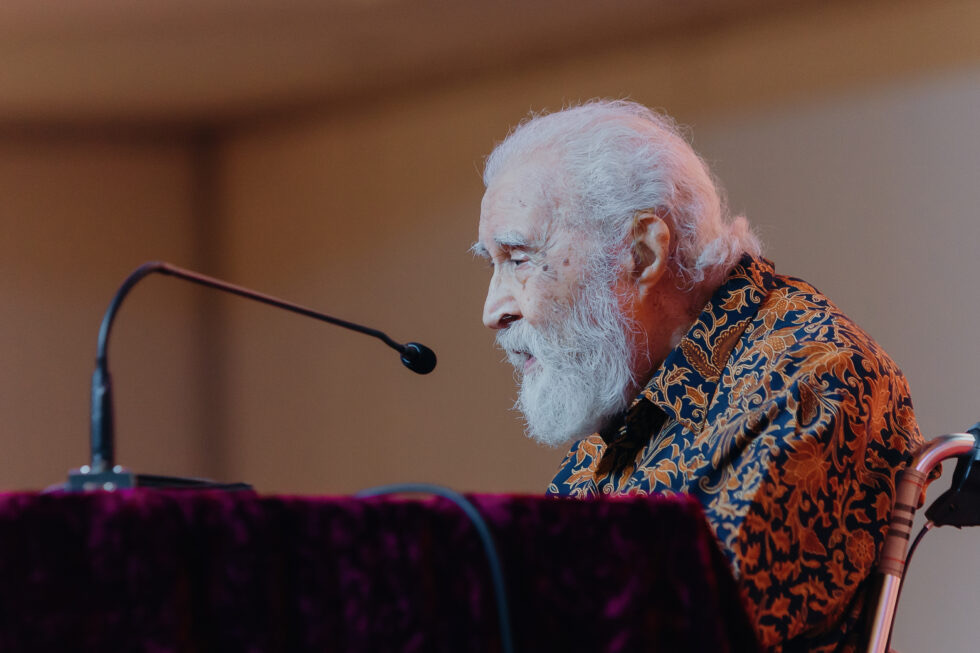
By, Md Maruf Hasan
Like Farīd al-Dīn ʿAṭṭār’s epic poem, “ The Conference of the Birds” , we may conclude from our journey of seeking knowledge that by passing through that century-long day and night, a burst of morning returns with sunshine, keeping awake, crossing miles in barefoot, you now find nobody else except yourself. It is a painful journey, but you at least realize something strange about your limitations in this vast Cosmos. It is like the enlightenment of Gautama Buddha or Mystic enlightenment about life and our known universe. Arthur Schopenhauer describes the world are presentation, and he speaks about the (blind) Will.
He also referred to traditional Hindu teaching about the universe as Maya (illusion). In Sufi teaching, you can see these wordings of reference, e.g. “Man is asleep (in a dream) and when he dies, he awakens” . Ibn Arabi used the Arabic term, “Khayal”(Imagination or Shadow or mirror reflection that doesn’t exist in reality ). In other words, the universe is like fictional stories. It’s a bit confusing and complex, but kindly bear with me till last of my essay to understand why I am lamenting these distorted thoughts to refer to one of the brightest minds in the Malay Archipelago.
When we learn about Sufi literature in Islam, most of us get a negative connotation, like it is deviated knowledge from original Islam, or Sufi literature is all about romanticism(love or emotion) or it got philosophical influence from different religions and traditions. These reasons are used to avoid readingand appreciate the intellectual heritage of early Islamic civilization. However, we have witnessed some Muslim scholars in 20th century used this intellectual heritage of Islamic Civilization to encounter spiritual crisis that West was facing. Muslim Youths may get affected in near future.
That’s why Muslim scholars produce some intellectual works for future Muslim youths by relating with early Islamic literature. Western theologians introduce perennialism in response to the spiritual crisis of Modernity (Godless Minds), but Muslim scholars took advantage of early intellectual heritage to show the beauty of organized religion like Islam.
In 1978, Prof. Dr. Syed Muhammad Naquib al-Attas gave his first impression under the book title , “ Islam and Secularism”. The very simple words written in the middle of the page for dedication.
TO
THE MUSLIM YOUTH
The very first and second chapter is devastating and explains the spiritual genocide in the Western Academia. Academia is mostly merciless place to destroy all the literature with critique mindsets. Hence, to defend Islam in academia is undoubtedly anextreme hard work, but if the task is to be given to defend the very epistemological and ontological ground of Islam, Muslim youths must be prepared to suffer. The journey in Academia is never easy. There is no short cut way to speak for Islam as I understood over the decade of my university education. It is like the zigzag path in the jungle while climbing the peak of the Gunung(Mountain) Kinabalu. I climbed there in 2017 in climbathon. It was windy and raining, yet the organizer decided to have the race. It was cold, and almost everybody rushed to finish the race. There is no rest in the race and there is no short cut path for us. Maybe you will get thousands of rejections along the way, and nobody will be there while you are in the peak, yet you have to decide to walk to reach the peak. Climbing of Mountain Everest is more dangerous, the climbers can see the death bodies that are stuck for decades in the snow, they decide to pass by. Academia is more extreme and merciless than climbing the toughest mountain on this planet.
Michio Kaku once told in one of his books about the story of Albert Einstein about his academic life during PhD, he was alienated and his neighbors and family members thought , he is good for nothing. Yet what I am going to write down here nowis not about personal suffering. The Oldman, Naquib al-Attas,was trying to pin down more subtle problem that Muslim youths are going to face in near future. Pakistani Philosopher, Muhammad Iqbal, also got that same message. When scholars of Islam in 20th century encounter Western Secular knowledge, they come to realize at one point that there is lacking in engagement with traditional interpretations. Naquib al-Attas and Muhammad Iqbal extended their horizon to look into intellectual heritage of Islam.
Firstly, I need to break the common misconceptions about intellectual literatures written by Imam Ghazali or Ibn Arabi. There are lot of criticisms against their writings, but as a Muslim academic when you find the crisis in Western Secular Knowledge, and you firstly read through all the Islamic intellectual heritage, you will end up appreciating these early scholars, because they used cosmopolitan approach to answer some inherent problems faced by other scholars during that time.
It is not about Imam Ghazali or Ibn Arabi is right or wrong, rather as contemporary Muslim academicians , you need to formulate some answers against Godless (Allahless)literature. You do not need to accept any past scholars for granted, what you can take is the part which is beneficial to respond to the current body of knowledge. Abbas al Attas in the University of Malaya in his recent speech gave remarks about Ibn Khadun’s theory. Two audience members accused Ibn Khaldun as racist and patriarchal. Abbas asked not to accept his full theory for granted, rather you can take small part, that is beneficial for your research to defend Islam. The works of Muhammad Iqbal and Naquib al-Attas are similar in application as I just said now. Iqbal criticized Sufism, and he took advantage of intellectual heritage of Islam to defend Islam international level. Muslim academicians and Muslim Youths should reconsider these issues while working for Islamization of knowledge. The knowledge that is produced or suggested by human minds has option to accept or reject or reconcile.
Prophet Muhammad (PBUH) in the battle of Trench , he accepted the advice of a Persian companion who is not Arab. The knowledge and wisdom are accepted so long it fulfills the purpose of defending the Din of Allah SWT. The works of Naquib al-Attas are really remarkable examples for Muslim youths in contemporary discourse. The task is huge for Muslim Youths in the 21st century, but the Old Muslim Scholars of 20th century showed the way how to move forward by appreciating intellectual heritage of Islamic civilization to speak on behalf of Allah SWT.

- Knowledge Transfer on Stingless Beekeeping and Downstream Product to Empower the Communities - August 3, 2026
- Growing Together: How IIUM and Kebun Bandar Sungai Bunus Cultivate More Than Just Green Spaces - August 3, 2026
- Khalifah Nisa’: Reclaiming Women’s Role as Guardians of Creation - August 3, 2026