By, Nur Nasuha Rosley & Muyassarah Mayamin
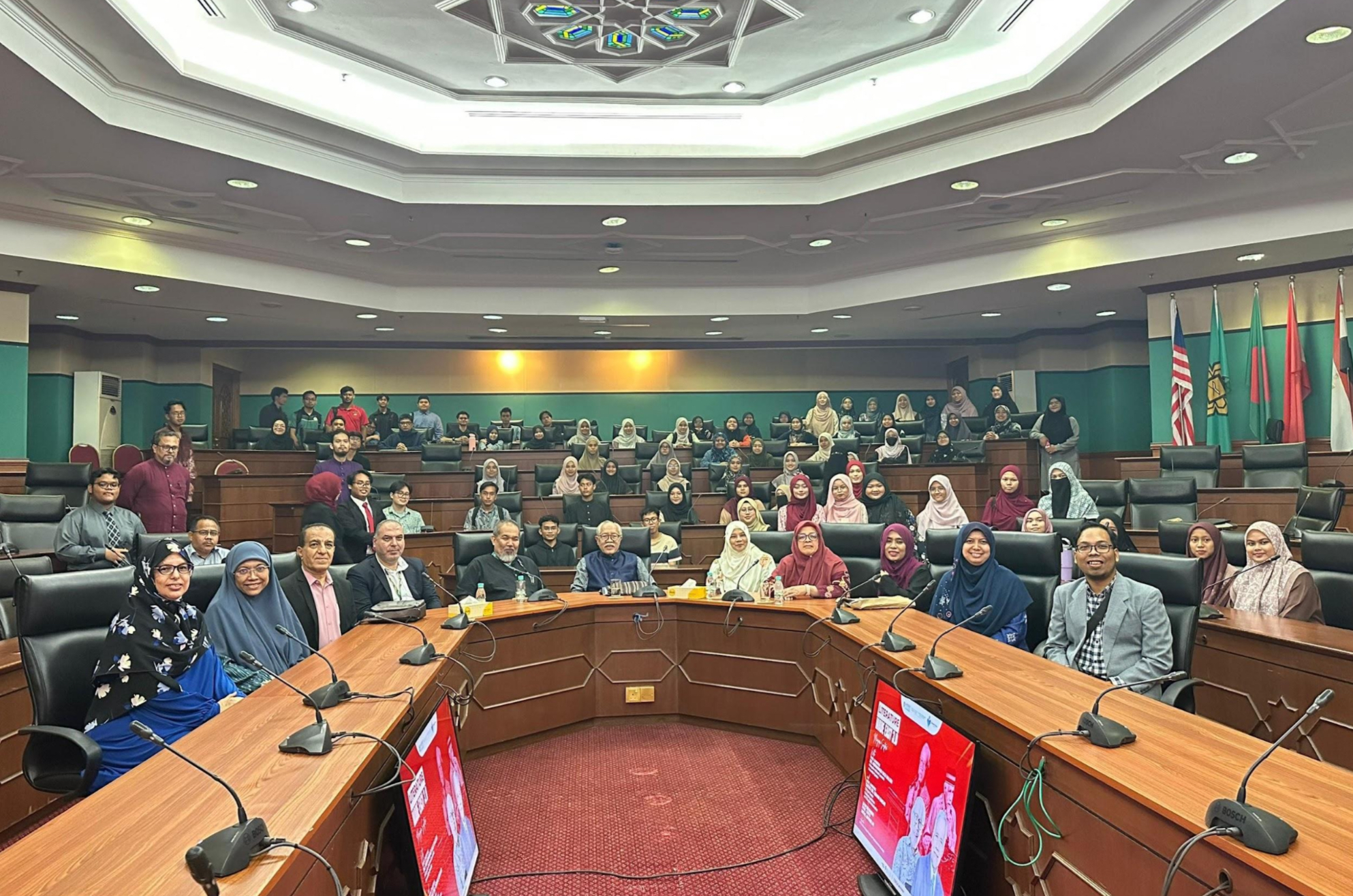
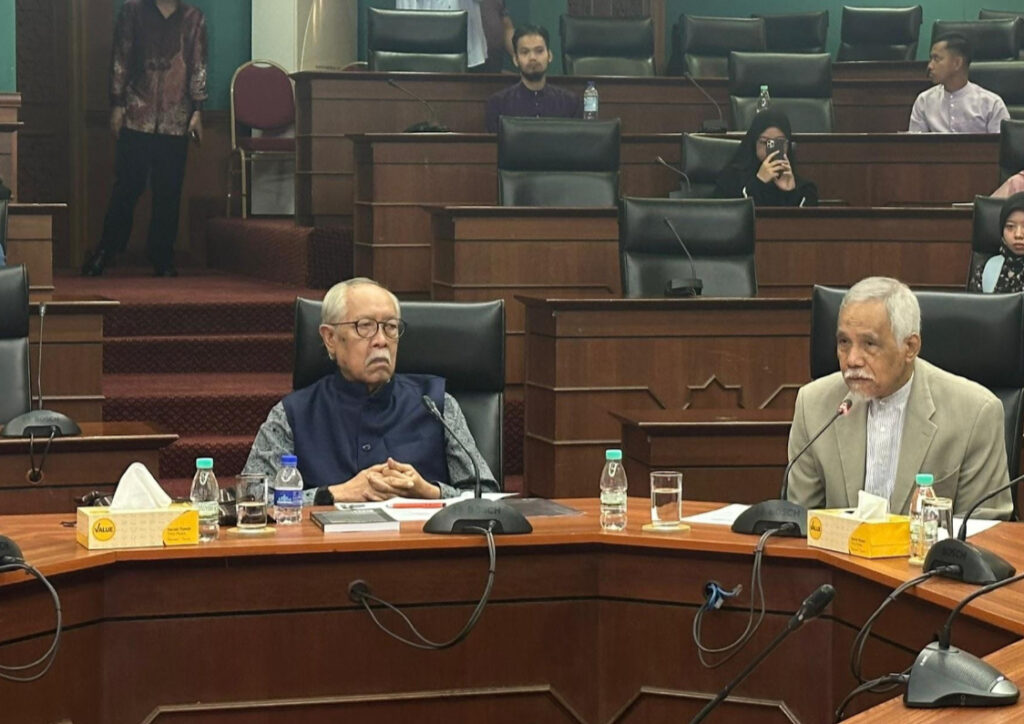
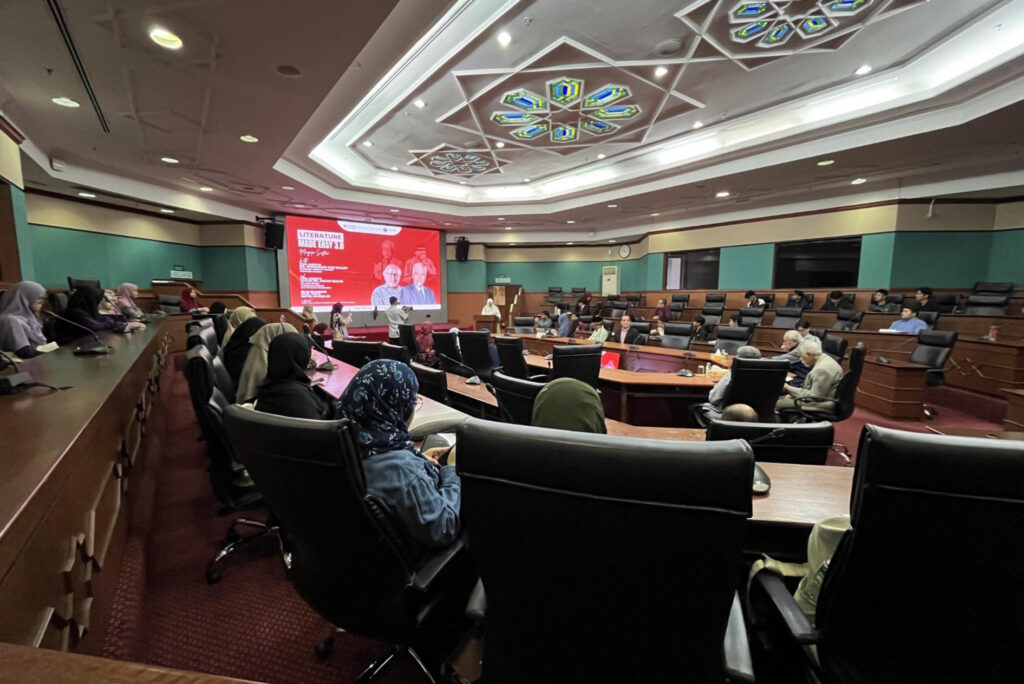
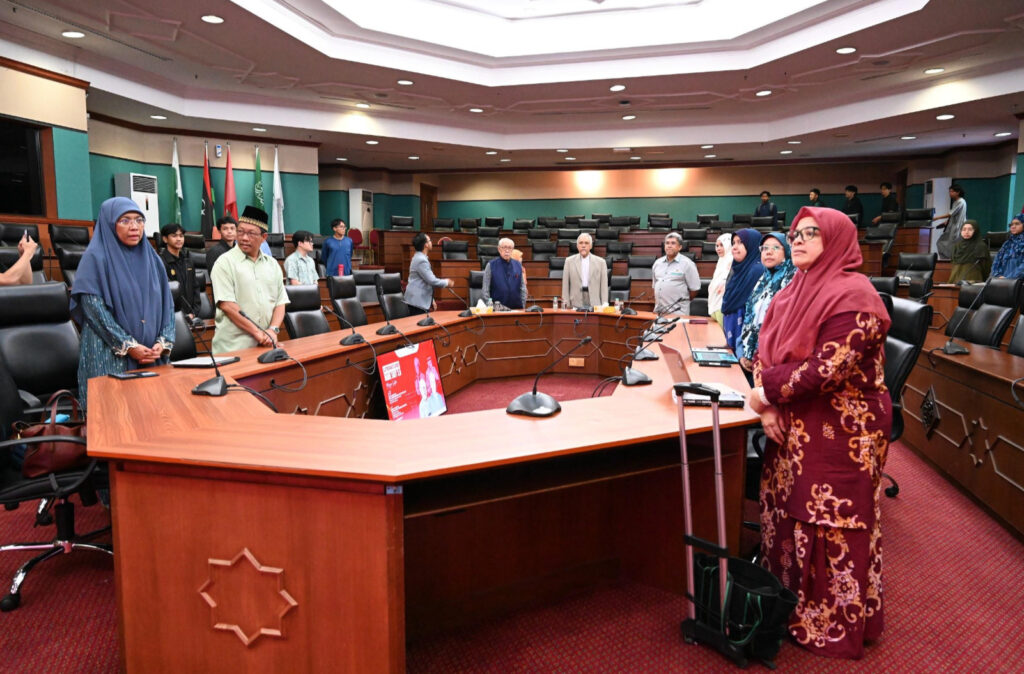
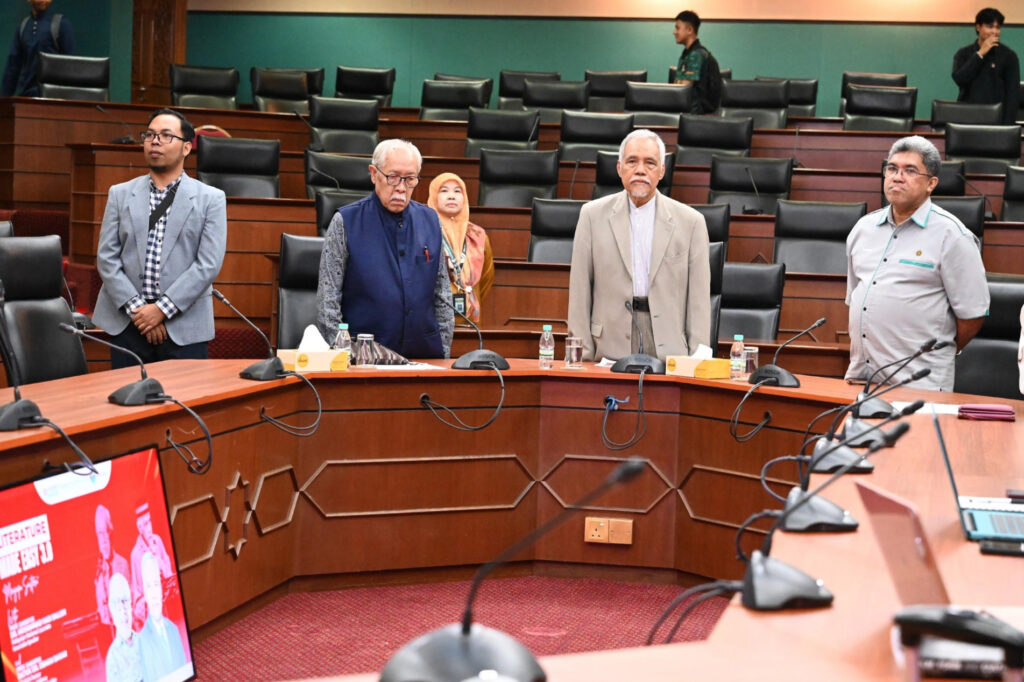
GOMBAK, 21 May 2025: The Secretariat of English Language and Literature (ELITS)—in collaboration with the Secretariat of Arabic Language and Literature (ALA), Korpus Kesarjanaan Sastera dan Kemanusiaan of Akademi Profesor Malaysia, International League of Islamic Literature Malaysia (ILILM), and the Omani Research and Studies Centre (ORSC)—have organized the third episode to the ELITS’s flagship programme, Literature Made Easy with the title of “Mengapa Sastera?” or “Why Literature?”. Conducted on 21st of May 2025 in the brilliant Senate Hall of the Muhammad Abdul-Rauf Building, this episode featured a remarkably unprecedented assemblage of distinguished speakers: Professor Emeritus Dr. Muhammad Haji Salleh—a Malaysian National Laureate, and Professor Emeritus Datuk Dr. Osman Bakar—the 7th IIUM Rector.
Literature Made Easy 3.0: “Mengapa Sastera” with Professor MHS is an initiative by the Academic and Intellectual Bureau (ACE) of ELITS as part of the Language Made Easy Series(LME) to inculcate enthusiasm for subjects of language, linguistics and literature. This programme aims to explore the significance of literature in reflecting on thought, culture, and identity while making literary appreciation more accessible to all, particularly for students of literature. This episode has its audience broadened to include the whole community of the International Islamic University Malaysia (IIUM). This programme also splendidly serves as a monumental milestone for ELITS, wherein the society marks its first collaboration with multiple secretariats: the Secretariat of Arabic Language and Literature (ALA), Korpus Kesarjanaan Sastera dan Kemanusiaan of Akademi Profesor Malaysia, International League of Islamic Literature Malaysia (ILILM), and the Omani Research and Studies Centre (ORSC).
Literature Made Easy 3.0: “Mengapa Sastera” has engaged the participation of more than 100 students, staff and lecturers from various Kulliyyah of IIUM. In addition to that, this event had also, among others, attracted representatives from the University of Malaya (UM) and Universiti Tun Abdul Razak (UNIRAZAK) into its nearly three hours session. Also present was Professor Dr. Shukran Abd. Rahman, the Dean of AbdulHamid AbuSulayman Kulliyyah of Islamic Revealed Knowledge & Human Sciences (AHAS KIRKHS); Professor Dr. Rahmah Ahmad H. Osman, the Head of the Scholastic Corpus for Literature and Humanities andDirector of The Omani Research and Studies Centre; Dr. Tanja Jonid, the Head of Department of English Language and Literature (DELL); Assoc. Professor Dr. Ainul Azmin Binti Md. Zamin, the Head of Responsible Research & Innovation; and numerous other respected lecturers from a diverse range of Kulliyat.
Literature in Relation to Ummatic Excellence and Tawhidic Epistemology
The event commenced with a welcoming speech by Professor Dr. Rahmah Ahmad H. Osman, followed by the 7th IIUM Rector, Professor Emeritus Datuk Dr. Osman Bakar’s welcoming speech and thematic introduction on Ummatic Excellence and TawhidicEpistemology. The Rector discussed the significance of literature, wherein it symbolizes the mirror to human’s soul. Literature is an art form that allows humans to peer into each other’s heart and psyche in order to better understand and recognize their human essence. He emphasised that literature is not just mere recording of human’s raw emotion, but it also contributes to the formation of a civilisation, including the Islamic civilisation.
From an Islamic perspective, all sorts of knowledge is rooted in Tawhid which is the very essence to the theme of Tawhidic Epistemology—a concept introduced by Professor Emeritus Datuk Dr. Osman Bakar himself—that includes knowledge of literature. He further elaborated that literature must serve three components; it must serve Haqq, it must be a tool for moral, spiritual and intellectual power, and it must pose as an aesthetic device for mankind. Literature at its core must bring mankind closer to God all while delivering the truth that is beliefs or actions agreeable with Islamic teachings sanctioned by Allah SWT.
Literature must also serve as a tool for us to gain moral and spiritual power alongside intellectual power. Afterall, Islam celebrates the concept of Syumuliyyah or comprehensiveness. Therefore, Muslims must create and consume literature that can act as a catalyst to their empowerment in all areas. Lastly, literature must feed humans’ need for beauty and aesthetics. Mankind must listen to the sound of language, their ideas and culture of others in order to incorporate them in literature, as these elements emotions, intellect and music are the foundations of literature. Only by understanding themselves and the world around them, can they better know of their Almighty Creator, Allah SWT.
The Malaysian National Laureate’s “Why Literature?”
The Rector’s speech was superseded by Professor Emeritus Dr. Muhammad Haji Salleh, who then delivered his talk on “Mengapa Sastera” . Professor MHS explicated the cruciality of literature to mankind and its civilisations. He opened his talk with a short note of the current situation of literature in Malaysia, wherein its government sidelines literature while overvaluing Science, technology, Engineering and Mathematics (STEM), resulting in the marginalization of the arts and literature. He proceeded with highlighting the unbreakable affiliation between literature and humanity, specifically that of a civilisation.
To the renowned National Laureate, other than literary works like pantun, prose orhikayat (legends), literature also consists of non-literary works such as Hukum Kanun Melaka (Malacca Laws) and Undang-Undang Laut Melaka (Maritime Laws of Malacca). In literatureresides the local and native wisdom of a nation; all of a nation’s emblems of identity, sophistication and glory are encapsulated in their written records. As aforementioned, literature is tightly bound to a civilisation, he added that this is due to the nation’s history being recorded in literature along with local proverbs, customs and laws. Only by writing those down, can the nation retain their philosophy and way of life.
Professor Emeritus Dr. Muhammad Haji Salleh further explained that literature gathers the best of human values, it draws the soul of an individual and enshrines it for the future generations to contemplate and ponder over. He explicitly mentioned that storytellers, poets and narrators are the heir of trustees for the human heart and mind. Literature exists so that people realize their existence and purpose on earth, and most importantly, so that they may be able to show the world their legacy and self-painting of their identity, which, as said by the professor, are the “beautiful flowers in a beautiful language garden”.
By the end of the talk, a Q&A session was held and a large number of questions were posed towards the honorable Professor Emeritus Dr. Muhammad Haji Salleh by both students and lecturers. The questions ranged from the role of religion in literature, to the public’s diminishing interest in their native language and literature, and also to the distinction between a “bad” and “good” literature. Overall, a fruitful and insightful discussion was fostered as the Q&A session went on for nearly an hour with numerous inquiries asked and answered.
Defining a Laureate: Literary or Religious?
A lecturer from the department of Islamic Revealed Knowledge (IRK) inquired on the potential synergy between religion and literature, and whether one can merge both the latter and the former to be embodied in one’s scholarship, like that of HAMKA—the prominent pen name of the great ‘ālim, writer and philosopher, Haji Abdul Malik Karim Amrullah. ProfessorEmeritus Dr. Muhammad Haji Salleh responded to this query by stating that it is in actuality, desirable for one to be an expert in both fields, and that the former is never alien to the latter, and vice versa. This dilemma is in fact, a contemporary departure from our historical predecessors—that one’s scholarship and prowess are to be strictly limited to only one field of knowledge; a divergence which has never gained prominence since the beginning of time.
Revival to Language and Literature in Malaysian Syllabus
An anecdote was also shared by a lecturer regarding the prevalence of literature in Malaysian schools’ syllabus, which is one of the topics briefly mentioned by the speaker. Other than that, a representative from Universiti Tun Abdul Razak (UNIRAZAK) who also happened tobe Malaysian Chinese, queried the speaker on the efficacy of learning Malay in schools, especially in vernacular schools where racial demographics are often unevenly concentrated. A few other questions were asked on this similar scope, to which were all answered by the National Laureate in a similar tone; language and literature is essential to the building of a nation, and the lack of it—especially in the educational syllabus—may induce an imbalance to the entire system.
To Professor Emeritus Dr. Muhammad Haji Salleh, literature should be a canon in the educational system, as the begetting of an ideal human is null without literature, what more to the nourishment of a flourishing nation or civilization. As much as STEM is essential to the advancement of life, it can neither exist nor transmit on its own. It is through literature that human beings are able to become mature and wise, who will then embody the cosmopolitan quality of their country through their writings, thus immortalising a culture’s aspects of wisdom, sciences, religion, arts, law, and its customs.
The Standing of Literature in Translation
A student from the Department of English Language and Literature (DELL) asked for the speaker’s opinion on learning works of literature through its translation, especially as regulated in some subjects of the literary department. It is understood that her primary concern was for the probable unfairness in translation, which may result in the waning of any nuances only found in the writing’s original language and expressions, at the grave cost of being lost in translation. However, Professor Emeritus Dr. Muhammad Haji Salleh, with all his wisdom, assured her that all that matters in learning literature is its core value and its themes. He explained that thebeauty and nuances of a particular language is indeed important and at times irreplaceable. Nonetheless, the values, morals and wisdom encapsulated in the writings of literature are what one must give utmost focus on. The speaker also noted the role of the linguists and translators in this regard, that is to produce fine and felicitous translation of a literary work, so that it would serve justice to complexity and intricateness of the original text.
Conclusion
Following the intensive session of questions proposed by the now highly enlightened audience, the event was adjourned with a giving of memento to Professor Emeritus Dr. Muhammad Haji Salleh in recognition for the profound and impactful discourse on the value of literature to the sustenance of the human psyche and soul. Attendees have remarked their deep enjoyment and appreciation of the third episode of Literature Made Easy, making it a significant achievement for ELITS in initiating such programmes. Literature, as elucidated by the National Laureate, enriches the colour and refinement to human life and illustrates the meaning to our existence as beings in the world. Literature is the vocation of the humanities, which has regrettably been marginalized and undervalued by society—something to be reversed in the contemporary world.***

- Knowledge Transfer on Stingless Beekeeping and Downstream Product to Empower the Communities - August 3, 2026
- Growing Together: How IIUM and Kebun Bandar Sungai Bunus Cultivate More Than Just Green Spaces - August 3, 2026
- Khalifah Nisa’: Reclaiming Women’s Role as Guardians of Creation - August 3, 2026