By, Siti Fatimah Idayu
What existed before Islam in the Malay world? As the majority ethnic group in Malaysia—once known as Tanah Melayu—have we truly reflected on our roots, our way of life, and how our civilization began? More importantly, have we understood how Islam was embraced and why the modern generation must reconnect with this history? The Malay identity was shaped long before colonial encounters. It was rich in culture, ethics, and traditions, and later elevated through the flourishing of Islam. However, contemporary society is often captivated by Western cultural dominance and global homogenization, placing us at risk of losing touch with the foundational identity that once defined Malay civilization.
Before and After Islam
Before 1400 AD, the Malay Archipelago was strongly influenced by animist, Hindu, and Buddhist beliefs. Proto-Malays and Deutero-Malays adhered to indigenous polytheistic traditions that centered on nature spirits believed to inhabit mountains, forests, stones, and animals—each imbued with semangat (spiritual essence). These belief systems were not codified in a single scripture but were practiced through rituals, oral traditions, cosmologies, and guided by shamans and soothsayers. The arrival of Islam did not result in the sudden eradication of these earlier beliefs. Instead, Islam spread peacefully and gradually, moving through coastal regions, urban centers, inland areas, and rural communities until its presence became widespread. Importantly, animist-Hindu-Buddhist elements were not entirely eliminated; rather, many were absorbed into folklore, cultural practices, or syncretized with Islamic concepts. For example, beliefs in spirits and the continued presence of shamans persisted as cultural remnants even after Islam was formally embraced as a monotheistic faith grounded in tawhid.
Islam and the Formation of Malay Culture
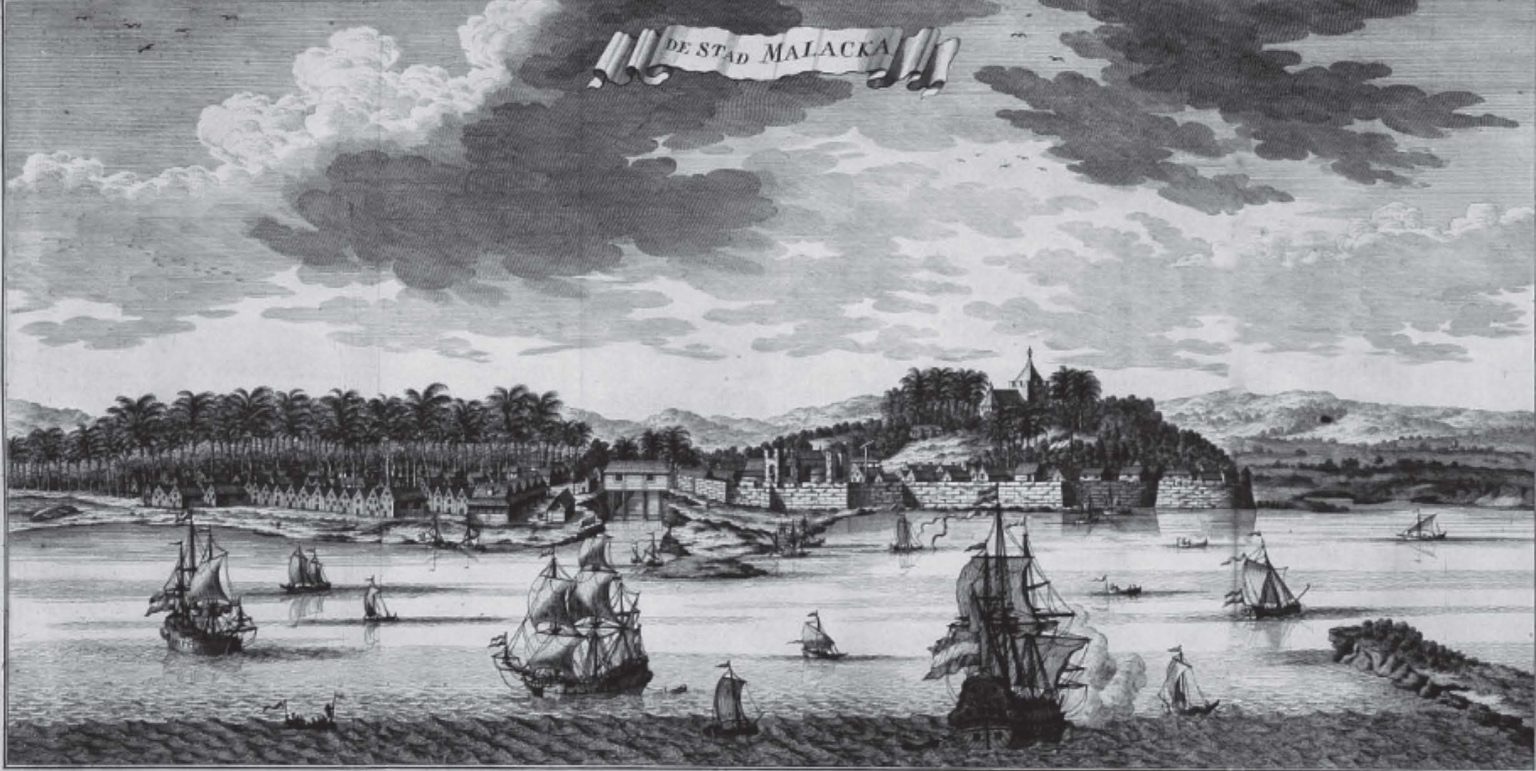
The Golden Age of Malacca reflects the significance of Islam in the Malay world. Malacca emerged as a thriving hub at the crossroads of civilizations, attracting Arabs, Chinese, Indians, and Persians who converged through maritime trade routes. These interactions brought not only material wealth but also spiritual and intellectual exchanges. Islam entered the Malay world incidentally through trade, migration, marriage with local women, and services, and more deliberately through political alliances and royal patronage.
Notable contributors included:
- Arab Muslims from the Umayyad period, Hadramawt, and South Arabia.
- Chinese travelers and traders from Yunnan, Canton during the Tang Dynasty, and Quanzhou, who exchanged ceramics for spices such as pepper.
- Muslim Indian traders from Gujarat, Malabar, and among the Chulias, who traded textiles, salt, indigo, and cotton in exchange for spices.
Over time, Islam became a comprehensive framework shaping governance, law, culture, and identity in the Malay Archipelago. Its expansion was further institutionalized by early Muslim kingdoms such as Perlak and Samudra-Pasai (modern-day Aceh), which functioned as centers of Islamization. These sultanates promoted Islam through diplomacy, scholarly networks, and the introduction of the Jawi script, embedding Islamic thought within the Malay worldview. During this period, religious acceptance was closely connected to political legitimacy and economic strategy. The Malays, known for their openness and adaptability, embraced Islam not merely as a replacement for earlier beliefs but as a holistic system guiding social order, leadership, and identity.
As Muslim Malay historian Khairudin Aljunied notes in Islam in Malaysia: An Entwined History:
“Upon accepting Islam, Malay Muslims built upon that legacy to create prominent states and polities, energetic scholarly and economic networks, and highly cultured societies that sustained Malay standing in an increasingly connected world.”
A Brief Timeline of Islamization
8th–10th Centuries: The Seeds of Islam
Early Muslim contact with the Malay world is recorded during this period. The kingdom of Perlak in North Aceh emerged as the earliest known Malay polity to embrace Islam. Persian and Arab Muslims fleeing political turmoil during the Tang Dynasty settled in Malay regions, strengthening Islamic influence. By around 900 AD, evidence of Muslim presence appears in Kedah, notably through the tombstone of Shaykh Abdul al-Qadir.
11th–13th Centuries: Gradual Islamization
Islamic influence continued to grow. Muslim tombstones were discovered in Pahang, and a mosque was reportedly built at Mount Jerai, Kedah, marking organized Islamic worship. The ruler of Kedah, Sultan Muzaffar Shah, converted to Islam. Meanwhile, the Sultanate of Samudra-Pasai, founded by Sultan Malik al-Salih, became a major center of Islamic learning. Marco Polo’s visit to Perlak further confirms that the local population had adopted “the Law of Muhammad” through Arab merchant influence.
14th–16th Centuries: Popularization and the Golden Age
The Terengganu Inscription Stone provides evidence that Islamic law was implemented in the region. During this era, the term Melayu began appearing in Chinese records to describe communities in Sumatra and the Malay Peninsula. King Adityawarman of Majapahit referred to his kingdom as Melayupura, signaling the recognition of the Malays as a collective civilization across Southeast Asia, united by shared language, customs, and heritage. This period culminated in the Golden Age of Malacca, which emerged as a global center of trade, Islamic governance, and Malay culture. Its strategic location positioned it at the heart of the Malay Archipelago and solidified its influence across the region.
Reflections for the Modern Generation
The ruh of Islam (ad-din) was never meant to be inherited passively; it is a living guide for ethical conduct and social responsibility. Our ancestors did not merely defend their lands—they devoted their lives to preserving a great civilization rooted in revelation and reason, particularly during the Golden Age of Malacca. Understanding this history allows modern generations to stand firmly in their Malay identity and honor its legacy. This reflection should serve as a wake-up call for younger generations to revisit the foundational narratives of Islam in Malaysia. It is not about romanticizing the past, but about preserving and upholding it. By rediscovering the intertwined history of Islam and Malay civilization, we ensure that Western imperialism and cultural dominance do not erase the identity that once shaped who we are today.***
Siti Fatimah Idayu is a post-graduate Master student from the Department of Sociology and Anthropology, Abdulhamid Abusulayman Kulliyyah of Islamic Revealed Knowledge and Human Sciences, IIUM.

- Knowledge Transfer on Stingless Beekeeping and Downstream Product to Empower the Communities - August 3, 2026
- Growing Together: How IIUM and Kebun Bandar Sungai Bunus Cultivate More Than Just Green Spaces - August 3, 2026
- Khalifah Nisa’: Reclaiming Women’s Role as Guardians of Creation - August 3, 2026