By, Md Maruf Hasan
At the International Islamic University Malaysia (IIUM), students are familiar with parcel rooms in each mahallah. Couriers deliver packages without necessarily knowing what is inside them. Only the recipient can open the parcel, examine its contents, and benefit from it. This everyday experience can serve as an analogy for divine revelation: messengers deliver God’s messages, while knowledgeable recipients reflect upon and interpret them.
In Islamic theology, Allah (SWT) sent revelations to humanity through prophets, culminating in the Qur’an as the final and universal message. While divine messengers transmitted revelation, scholars and believers are responsible for interpreting and understanding it within changing intellectual contexts. In the 21st century, New Atheism, rooted in a scientific worldview, has attempted to challenge religious narratives and deny metaphysical claims found in scriptures such as the Bible and the Qur’an. However, the Qur’an possesses unique epistemological and theological characteristics that invite continuous reinterpretation and engagement with contemporary scientific thought.
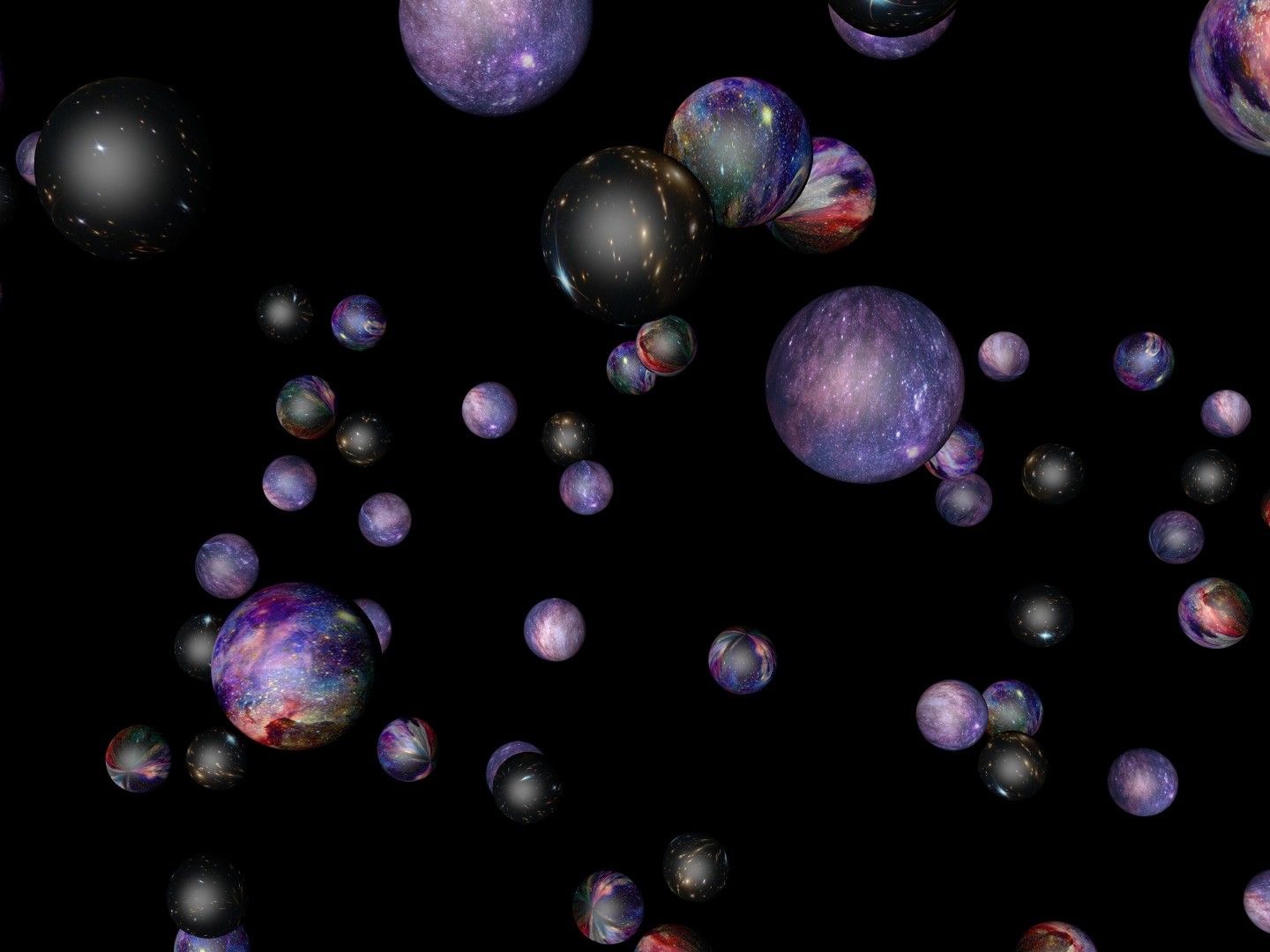
The Qur’an acknowledges previous scriptures and simultaneously asserts that earlier revelations were subject to corruption and distortion. This reflexive theological stance allows Islam to engage critically with both religious tradition and modern scientific discourse. In a previous essay published in IIUM Today, I discussed the relationship between Quantum Worldviews and the Qur’anic Worldview, arguing that modern cosmology provides new conceptual tools for interpreting Qur’anic metaphysical descriptions. In response to New Atheistic critiques, this essay proposes a materialistic interpretive framework for understanding Jannah (Paradise) and Jahannam (Hell), not merely as abstract metaphysical realms but as possible ontologically real domains within a broader multiversal reality. Modern theoretical physicists, such as Michio Kaku, suggest that our universe may be one among trillions of universes arising from quantum fluctuations and physical laws beyond classical cosmology (Kaku, 2005). If such multiversal realities exist, Qur’anic descriptions of multiple heavens and earths can be revisited through a scientifically informed hermeneutical lens.
The Qur’an recounts the Isra’ and Mi‘raj, the miraculous journey of Prophet Muhammad (peace be upon him) from Masjid al-Haram to Masjid al-Aqsa and then through the heavens (Qur’an 17:1). Hadith literature further describes the Prophet’s observation of Paradise and Hell during this journey. These narratives suggest a cosmology that transcends the observable universe, aligning conceptually with modern theories of higher-dimensional spaces and multiple universes.
A particularly intriguing verse is found in Surah Hud (11:108), where Allah states:
وَأَمَّا ٱلَّذِينَ سُعِدُوا۟ فَفِى ٱلْجَنَّةِ خَـٰلِدِينَ فِيهَا مَا دَامَتِ ٱلسَّمَـٰوَٰتُ وَٱلْأَرْضُ إِلَّا مَا شَآءَ رَبُّكَ ۖ عَطَآءً غَيْرَ مَجْذُوذٍۢ
“As for those destined to joy, they will be in Paradise, abiding therein as long as the heavens and the earth endure, except as your Lord wills—a generous gift without end.” (Qur’an 11:108)
The phrase “as long as the heavens and the earth endure” after the Day of Judgment raises profound cosmological questions. If the current heavens and earth are destroyed in the eschaton, this verse may imply the existence of other heavens and earths beyond our known cosmos. Such Qur’anic language can be interpreted as an early conceptualization of a multiversal ontology, where divine realities coexist with material structures governed by physical laws (Sunnatullah). Similarly, Qur’anic descriptions of Jahannam may be explored through a materialistic cosmological framework. Instead of viewing Hell solely as a metaphysical abstraction, it may represent a distinct ontological realm with its own physical laws, dimensions, and existential conditions. This does not reduce theological meaning but rather situates eschatological concepts within a broader scientific cosmology, enabling constructive dialogue between Islam and modern science.
In conclusion, the Qur’an invites intellectual reflection and reinterpretation across epochs. By engaging with contemporary cosmology and quantum theories, Muslims can develop a dynamic Qur’anic hermeneutics that responds to New Atheism and affirms Islam’s compatibility with scientific inquiry. The Qur’an remains not merely a historical text but a living intellectual parcel, awaiting thoughtful readers to open, reflect, and understand its message.***
References
Quran Foundation. Surah Hud (11:108). Quran.com.
Surah Hud (11:108)
Kaku, M. (2005). Parallel worlds: A journey through creation, higher dimensions, and the future of the cosmos. New York, NY: Doubleday.
Md Maruf Hasan is a postgraduate student from Department of Usul al-Din and Comparative Religion and Philosophy, AHAS IRKHS International Islamic University Malaysia.

- Knowledge Transfer on Stingless Beekeeping and Downstream Product to Empower the Communities - August 3, 2026
- Growing Together: How IIUM and Kebun Bandar Sungai Bunus Cultivate More Than Just Green Spaces - August 3, 2026
- Khalifah Nisa’: Reclaiming Women’s Role as Guardians of Creation - August 3, 2026