By, Mohd Abbas Abdul Razak
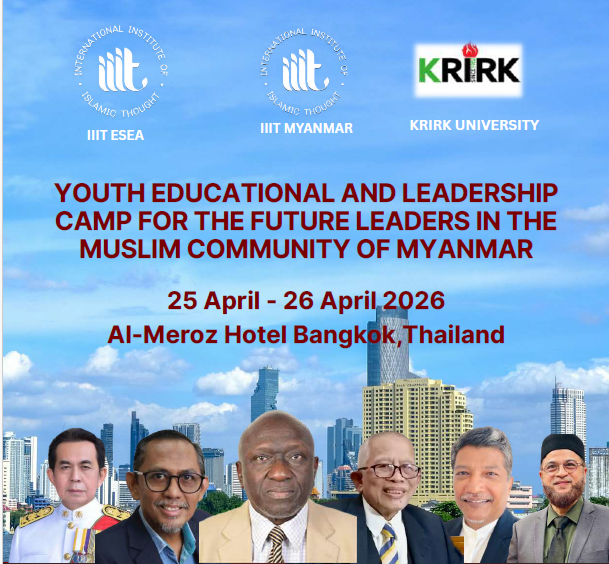
On April 25 and 26, 2026, a leadership camp was organized for the diasporic Myanmar Muslim community living in Bangkok. The camp was jointly organized by the International Institute of Islamic Thought for East and Southeast Asia (IIIT ESEA) and the International Islamic College of Bangkok at KRIRK University. The two-day program was held at Al Meroz, a reputed hotel for its Islamic ambience and hospitality, which is situated amidst the hustle and bustle of Bangkok city. The central theme of the camp revolved around education and leadership.
The camp’s welcoming speech was delivered by Assoc. Prof. Dr. Maulana Akbar Shah, who served as the representative of IIIT Myanmar as well as the director of the camp. During his address, Dr. Maulana elaborated on the main objectives of the program. In concluding his speech, he presented a video that candidly captured the various intellectual activities organized by IIIT over the years for Myanmar citizens living in Malaysia and Thailand. In addition, Dr. Maulana also conducted a workshop session under the title, ‘The Vanguard of Awakening: Integrating Prophetic Ethics and Modern Science for National Resilience.’
Prof. Dato’ Dr. Mohamad Fauzan Noordin, Director of IIIT ESEA and Deputy Rector of Student Development and Community Engagement at International Islamic University Malaysia (IIUM), also delivered a brief speech relating Islamic leadership to education. In a similar tone, Prof. Dr. Jaran Maluleem, a well-known intellectual from the International Islamic College of Bangkok at KRIRK University, emphasized the ideal leadership qualities required among today’s youth to create a wholesome society.
Prof. Dr. Omar Hasan Kasule, who currently serves as the Secretary General of the International Institute of Islamic Thought (IIIT), USA, was unable to attend the camp physically due to other official commitments. Nevertheless, he conveyed his message through a video presentation titled “Importance of Education for the Future Progress of the Muslim Community.”
Within the two days of the camp, several workshops were held to inspire and inculcate leadership qualities among the participants. Prof. Emeritus Dato’ Wira Dr. Jamil Osman conducted a session titled ‘Preparing Future Leaders of the Minority Muslim Community in Myanmar through Education and Economics.’ Prof. Dr. Mohamed Aslam Haneef, Deputy Rector for Research, Innovation, and Development at IIUM, conducted a workshop on ‘Bridging Social Justice with Sustainable Economic Development.’
General Observation
As a facilitator and speaker in many programs organized for the diasporic Myanmar Muslim community, I have witnessed a gradual yet promising development taking place within this marginalized community. As the years pass by, I continue to observe a remarkable increase in their spirit, motivation, and determination for change.
With the participation of distinguished intellectuals in their programs, a significant transformation can be seen in their self-confidence, willpower, language proficiency, and public-speaking skills. It is undeniable that these positive changes are contributing greatly to their overall personality development.
I truly believe that such encouraging progress will eventually nurture a new generation of intellectuals and future leaders within the community. In addition, the sponsorships and scholarships provided by the International Institute of Islamic Thought (IIIT) have catalyzed the transformational and phenomenal changes now taking place among students from Myanmar.
Education is the Cornerstone of Human Civilization
The importance of education in our lives is an undeniable reality acknowledged by all communities of the world, regardless of their cultural and religious backgrounds. With the global spread of the commodification of education, families, nations, and religious institutions are increasingly struggling to uphold the lofty ideals of what a truly good education system should be. Philosophically speaking, education is the broadening of one’s horizons of thought and understanding.
A system of education that merely focuses on preparing a workforce for the job market will most likely fail to produce individuals who possess holistic human qualities. The concept of education that emphasizes only intellectual and psychomotor development emerged during the Industrial Revolution in the West. Since then, the Western concept of education has gradually shifted its orientation toward producing good citizens capable of contributing to economic growth and national progress.
In contrast, the Islamic concept of education calls for the holistic development of the individual. Through education, Islam seeks to nurture a person intellectually, socially, emotionally, psychologically, physically, and spiritually. Moreover, Islam emphasizes that a well-educated person should maintain a harmonious relationship with God, the self, nature (flora and fauna), and fellow human beings, both Muslims and non-Muslims. Such an educated person demonstrates passion and compassion, spreads love, lives by the values of caring and sharing, and contributes toward peace and harmony in the world.
Education pursued solely for economic purposes, in the absence of moral, ethical and spiritual ideals, can lead society in the wrong direction. A nation that neglects the holistic concept of education aimed at the total transformation of individuals will inevitably suffer from various social evils, such as rising crime rates, white-collar crimes, and the widespread practice of corruption among leaders and government officials.
The Youth Camp in Bangkok
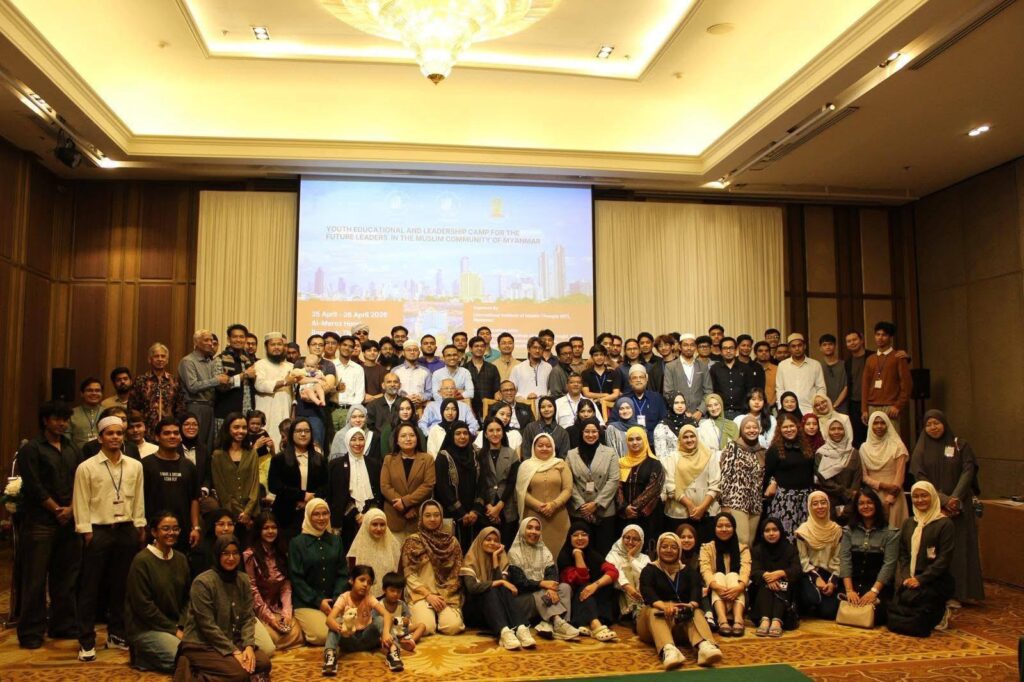
In contrast to other camps organized for the Myanmar Muslim community, the Bangkok programme brought together a slightly different group of participants. This time, the participants who attended the workshops came from diverse professional and social backgrounds. Among them were medical doctors, intellectuals teaching in Thailand’s institutions of higher learning, postgraduate students, members of the business community, individuals running charitable organizations, Muslim religious leaders, and many others.
In order not to miss the Islamic camp, some young Muslim parents even brought along their children and toddlers. The most senior participants were Mr. Abdul Wahhab Anand (86 years old) and Mr. Faisal Yahaya al-Khatiri (73 years old). What is remarkably great about these two great individuals is that they are involved in providing help to children with special needs and their families.
Overall, the enthusiasm for joining the camp was clearly reflected in the participants’ faces. In all the sessions held, there was an overwhelming attendance of about 130 participants, who made their way to the lecture halls designated for the parallel sessions.***
(The views expressed in this article are those of Dr. Mohd Abbas Abdul Razak, Department of Fundamental and Interdisciplinary Studies, AHAS KIRKHS, and do not necessarily reflect the official views or positions of IIUM Today.)

- Knowledge Transfer on Stingless Beekeeping and Downstream Product to Empower the Communities - August 3, 2026
- Growing Together: How IIUM and Kebun Bandar Sungai Bunus Cultivate More Than Just Green Spaces - August 3, 2026
- Khalifah Nisa’: Reclaiming Women’s Role as Guardians of Creation - August 3, 2026