By, Muntaha Artalim Zaim and Nur Qurratul Nusrah
The study of classical Islamic scholarship (turāth) remains a vital foundation for cultivating rigorous intellectual, analytical, and linguistic skills among students of Islamic studies. Turāth is not merely a collection of “old books,” but a living heritage that embodies centuries of scholarly refinement, methodological precision, and intellectual continuity. It encompasses authoritative works in fiqh, uṣūl al-fiqh, ḥadīth, tafsīr, Arabic language, and philosophy, which together form the backbone of Islamic civilization and its scholarly tradition.
While modern university education offers structured curricula, standardized assessment, and disciplinary specialization, it often lacks sustained engagement with complete classical texts. In many contemporary Islamic universities, including IIUM, turāth works are frequently presented only in excerpts or mediated through modern summaries and secondary literature. As a result, students may graduate without familiarity with the primary reference works of a madhhab, its technical terminology, or its internal logic. This becomes especially problematic when students are introduced to comparative fiqh before mastering even one school of law, leading to conceptual confusion and a superficial understanding of scholarly disagreement.
Historically, classical Islamic education followed a systematic and cumulative model of learning. Students began with concise foundational texts, mastered them thoroughly—often through memorization—and only then progressed to higher-level works and their commentaries. This pedagogical tradition produced scholars whose thinking was structured, whose mastery was deep, and whose understanding was rooted in clearly defined intellectual lineages. In Arabic grammar, for example, students began with al-Ājurrūmiyyah, advanced through its commentaries and poetic summaries, and eventually memorized the Alfiyyah of Ibn Mālik before engaging advanced works. Similar graded progressions existed in ʿaqīdah, uṣūl al-fiqh, and fiqh across different regions of the Muslim world, including the pesantren tradition of the Malay–Indonesian archipelago, where students systematically mastered the Shāfiʿī school through a sequence of authoritative texts studied cover to cover under qualified teachers.
Such an approach ensured not only intellectual clarity but also continuity of scholarly authority (iʿtimād), linguistic precision, and spiritual depth. Classical works were authored by scholars of proven expertise, transmitted through recognized scholarly chains, and endorsed across generations. Their language represents the highest standard of Arabic expression, and their enduring use reflects both academic reliability and spiritual integrity. Engaging directly with these texts enables students to access the original structures of Islamic thought rather than encountering them only through modern reinterpretations.
At IIUM, efforts have been made to integrate modern pedagogy with exposure to classical scholarship, particularly within the Department of Fiqh and Uṣūl al-Fiqh. Students are introduced to core texts representing the four Sunni madhhabs, as well as foundational works in uṣūl al-fiqh. However, due to curricular constraints and limited instructional time, engagement with these works often remains selective rather than comprehensive. This reality highlights the importance of complementary initiatives beyond the formal classroom.
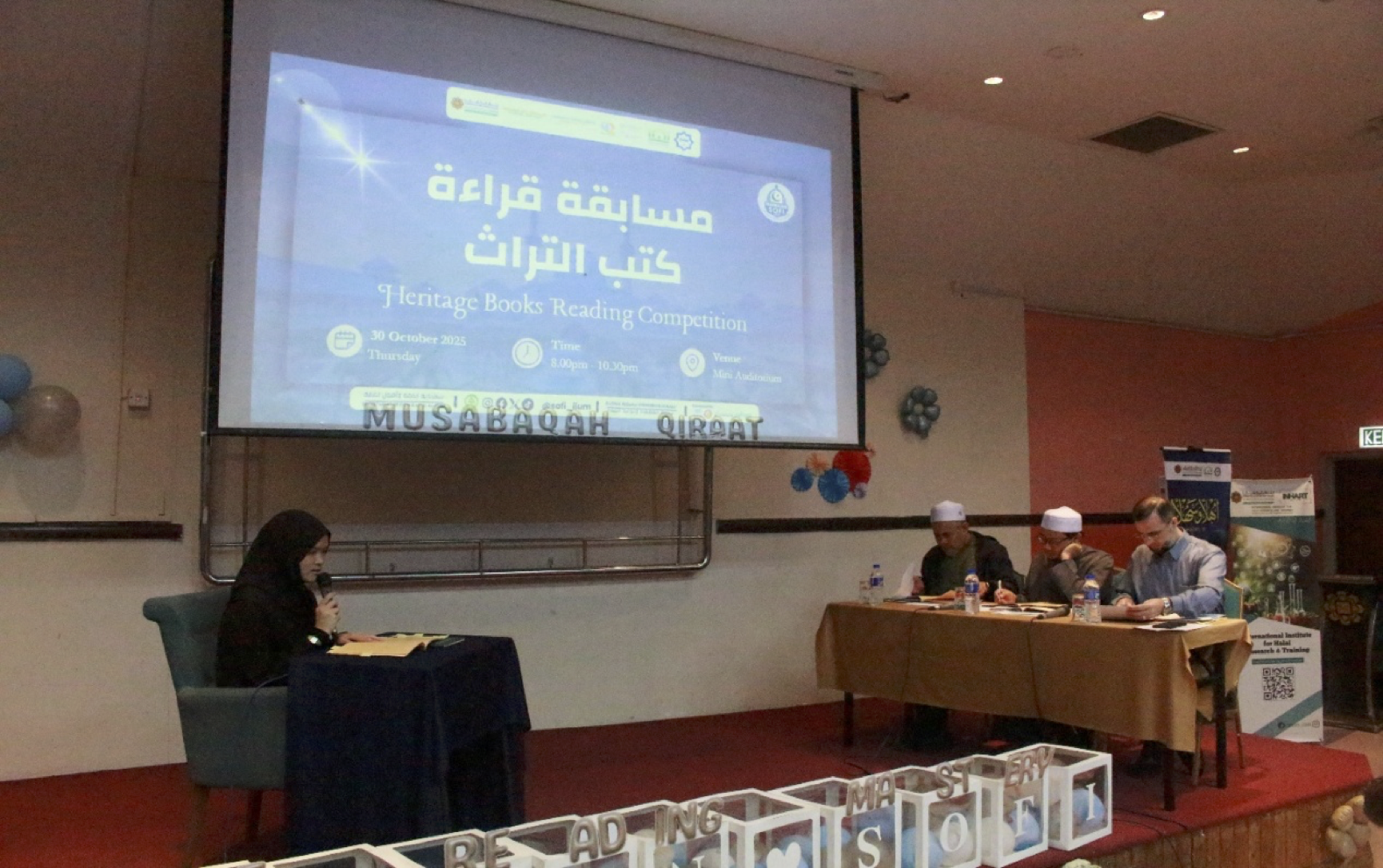
One such initiative is the Heritage Books Reading Competition (Musabaqah Qirāʾat Kutub al-Turāth), organized as part of Mahrajan SOFI 2025 under the Department of Fiqh and Uṣūl al-Fiqh. This program was designed to revive students’ direct engagement with classical texts and to serve as a practical platform for assessing linguistic competence, analytical ability, and intellectual maturity. The selected texts—Fatḥ al-Qarīb al-Mujīb in fiqh and Sharḥ al-Waraqāt in uṣūl al-fiqh—required participants to read unvowelled Arabic accurately, apply grammatical rules in real time, and demonstrate comprehension of legal and methodological reasoning.
The competition proved highly effective in strengthening students’ mastery of Arabic language sciences, particularly naḥw and ṣarf, while also enhancing their confidence, public speaking skills, and critical thinking. Participants were challenged not only to read fluently, but also to respond to probing questions, analyze arguments, and articulate scholarly reasoning before an audience. Beyond technical skills, the event cultivated a renewed appreciation for Islamic intellectual heritage and fostered a sense of pride in engaging with texts that have shaped Muslim scholarship for centuries.
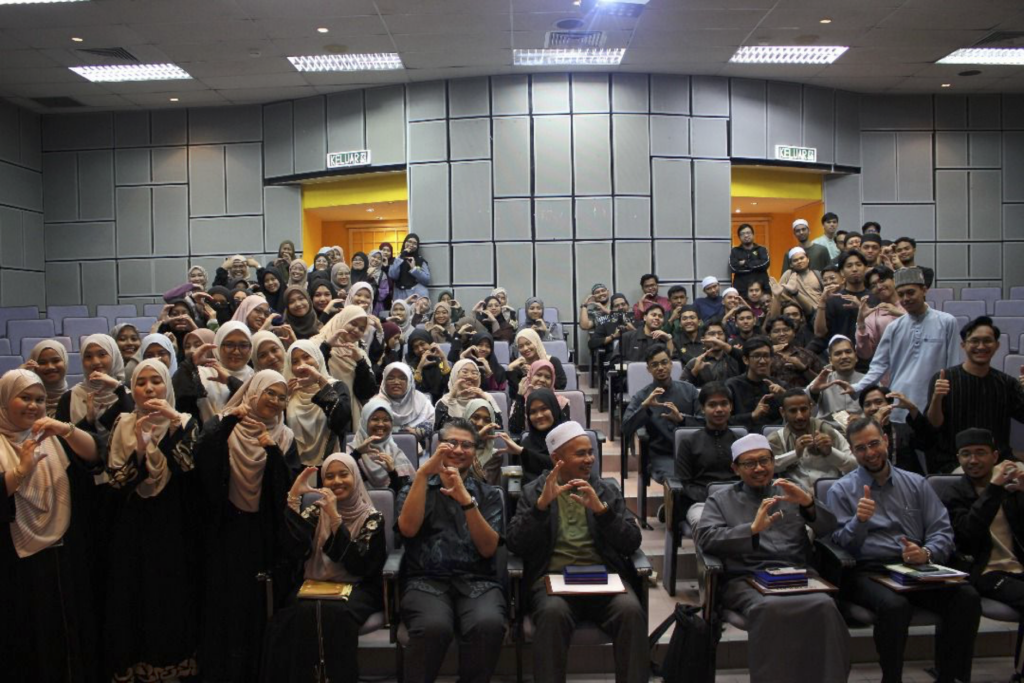
Overall, the Heritage Books Reading Competition demonstrated that meaningful engagement with turāth can significantly enrich students’ academic formation when combined with modern educational frameworks. It reaffirmed the value of classical texts as tools for developing disciplined reasoning, linguistic precision, and scholarly confidence. With continued refinement—such as expanded preparation time, improved technical support, and broader institutional participation—such initiatives have the potential to play a central role in producing graduates who are intellectually grounded in tradition while fully equipped to address contemporary challenges.***
Dr. Muntaha Artalim Zaim is an academic attached to the Department of Fiqh & Usul Fiqh, AHAS IRKHS, IIUM. He is also the Editor of at-Tajdid Journal, IIUM. (Email: muntaha@iium.edu.my) Nur Qurratul Nusrah is a student of the Department of Fiqh and Usul al-Fiqh, IRKHS, IIUM and the Programme Manager of the Musabaqah Qiraat Kutub Turath, Mahrajan SOFI 2025. Email: qurratulnusrah203@gmail.com)

- Knowledge Transfer on Stingless Beekeeping and Downstream Product to Empower the Communities - August 3, 2026
- Growing Together: How IIUM and Kebun Bandar Sungai Bunus Cultivate More Than Just Green Spaces - August 3, 2026
- Khalifah Nisa’: Reclaiming Women’s Role as Guardians of Creation - August 3, 2026