By, Md Maruf Hasan
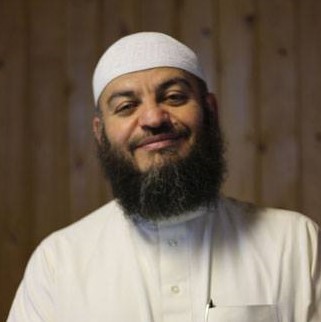
Dean of AHAS KIRKHS, Prof. Dr. Hafiz Zakariya, took an excellent initiative after being appointed by encouraging more future talks on the contemporary issues for Muslim societies. Last Friday, 25 July 2025 at Al-Tabari Conference Room,Sheikh Dr Haitham Al-Hadad (Chair of the Fatwa Committee, Islamic Council of Europe) shared his thoughts and experienceon the topic, “The Higher Objectives of Islam: A Thematic Guide to Maqāṣid, Halāl, and Ḥarām.”
Dr. Haitham was addressing about higher objectives of Islam that every Muslim should know. It is rather strange to hear such claims because when we hear terms like “Maqāṣid” ,“Halāl”,and “Ḥarām”, we develop a fever and phobia, not understanding this complex jargon. How come should every Muslim know about Maqasid al-Shariah? Yes , maybe some expertise of Islam can know, but not all. That is a natural thought process that may come to our minds.
To understand his contention, you just need to look at last month news in which we heard some of the Bangladeshi nationals got caught due to getting involved with Muslim terrorist organizations. Now those who are caught for funding, they are mentally brainwashed first by using the Quran and Hadith. Where is the problem then? Dr. Haitham pointed out that when some Muslim scholars fail to contextualize Islamic literature with current knowledge, the old interpretation without contextualization can hamper the higher objectives of Islam. He also emphasized that in the last 100 years the amount of knowledge that has been developed is enormous. If Muslim scholars can not adapt and contextualize with current knowledge, these old interpretations without contextualization can create so many problems like terrorism and others.
Now let’s look at the education curriculum of Muslim countries during and after the colonization period. In Indian subcontinent, there was traditional Islamic curriculum as we saw in Darul Uloom Deoband Madrasah Education System. After Colonization, we have noticed the secular education system. Later, we observe this Islamization or Integration education system. It seems to me that Islamization model is the best approach to eliminate radical terrorist groups and radical secularist groups that we have witnessed within Muslim countries for century. I do not think it is enough just to bypass the problem of radical groups by pushing towards specific people, e.g. it is their problem, not ours. For example, it is common mindset from traditional Islamic scholars that secular educated people do not understand Islam. Then, secular educated people think that traditional Islamic scholars do not understand the contemporary development of knowledge. How do they develop this mentality? They develop this mentality through the educational system in which they grew up. Those who are educated with Islamic knowledge and contemporary knowledge , they understand that both parties are missing the boat. These tensions do exist within Muslim discourse in Muslim countries.
At the end of the day, everyone gets affected is something happens as we have witnessed in the case of Afghanistan in which Muslim women are systematically deprived from education by using the Quranic Interpretation. The very contextualization is missing for sure.
Zaharani and Akhmetova in their 2021 publication made an important remark when they discuss about some concerns about Islamic discourse in the context of Malaysia, “The situation is getting more complex, as religion has been manipulated and politicized by certain Muslim groups who attempted to correlate the relationship between modernity and Islam. Islamic teachings have been politicized and reinterpreted to suit the need of this radical group, even though the practices are distorting and misleading. These groups have been given various labels such as radical, conservatism, fundamentalist, extremist, liberalist and terrorist, and they are bickering about Islamic law, principles and values which seem to be in contradiction with the concept of modernity as perceived today”
I think this is not only in Malaysia, rather every Muslim country is struggling from these same concerns. These distortions of thought could be very easily reduced if the education curriculum was designed based on the understanding and contextualization of Islam as Sheikh Dr Haitham Al-Hadad emphasized in his speech.
It can be said that the Muslim scholars that educational institutions produce should be trained in such a way so that they can contextualize Islamic teachings by aligning with the contemporary knowledge. It seems the prophetic hadith is important to quote here to contextualize the contemporary solutions for the problems that we Muslim countries face today.
Some men who were companions of Mu’adh narrated from Mu’adh that the Messenger of Allah (ﷺ) sent Mu’adh to Yemen, so he (ﷺ) said:
“How will you judge?” He said: “I will judge according to what is in Allah’s Book.” He said: “If it is not in Allah’s Book ?” He said: “Then with the Sunnah of the Messenger of Allah (ﷺ).” He said: “If it is not in the Sunnah of Messenger of Allah (ﷺ)?” He said: “I will give in my view.” He said: “All praise is due to Allah, the One Who made the messenger of the Messenger of Allah suitable.”(Jami` at-Tirmidhi 1327)
In another occasion, it was narrated as thus,
“Abu Huraira reported: The Messenger of Allah, peace and blessings be upon him, said: Verily, the religion is ease, and no one burdens himself in religion except that it overcomes him. So be moderate, seek closeness to Allah, give glad tidings, and gain strength for worship in the morning and the night.” (Sahih Bukhari 39)
When majority of Muslim scholars and leaders of Muslim countries are fit to lead the Muslim nations moderately with understanding and contextualization, these radical groups will gradually lose the ground to divert the general people to join in these types of terrorist groups. Hence, it is suggested that Islamization or Integration of knowledge in education is not optional rather it is very necessary for Muslim governments to adapt if they really wish to eliminate radical religious and secularist groups from Muslim societies.***
Photo credit the Islamic Council of Europe: https://iceurope.org/advisor/about-us/our-advisers/haitham-al-haddad/

- A Narrative English Synopsis of Allama Muhammad Iqbal: Teori Personaliti dan Pembinaan Ego (Khudi) - July 21, 2026
- A Catalyst for Community Transformation: The MAIWP-KAED Student Design Competition and MOU Signing Ceremony - July 21, 2026
- Youth Over Clicks: The Case for Maqasid-Based Social Media Design - July 21, 2026