By, Megawati Moris
Classes for semester 1, session 2025/2026, have ended, and students are currently taking their final examinations. This semester, I taught RKUD 2340: History of Western Philosophy, an introductory core course in the Department of Usul al-Dinand Comparative Religion and Philosophy at the International Islamic University Malaysia, Gombak.
For this course, I took a different approach to teaching and assessment, incorporating suggestions from generative AI, reflecting an integrative view of the current state of teaching and learning in the digital age. The focus shifted from assessment outcomes to the learning process, encouraging students to learn through assignments under regulated teacher guidance and supervision.
This approach responds to the call to enhance students’ interest and skills in philosophical and critical thinking. This aligns with the addition of ‘Philosophy’ to the Department’s new name, an initiative launched by the University’s Rector, Professor Emeritus Datuk Osman Bakar, in 2025.
More importantly, the move was to spearhead the epistemological approach, Tawhidic epistemology, or the unitive approach to the disciplines and branches of knowledge, to be the foundational approach for the department and the whole university curriculum.
It underscores the integration of the religious sciences and technological sciences and the natural sciences and the social sciences. As acknowledged by the Rector, the Tawhidicepistemology vision of IIUM supports and aligns with the Rancangan Pendidikan Tinggi Malaysia
(RPTM) 2026-2035, recently announced by the Prime Minister.
The philosophy course RKUD 2340 specifically required students to collaborate and give mini-lectures on a single Western philosopher, focusing on both the philosopher’s historical background and their key views and theories. The students needed to act as ‘instructors’ and explain these complex philosophical ideas clearly and engagingly to ensure their classmates’ understanding. The aim is to encourage critical discussion and reflective thinking among peers.
A related assignment was for students to submit a one-page handout to accompany their presentation, serving as a study aid for their peers. Additionally, students were required to write a one-page reflection commentary reflecting on their collaborative experience and the impact of the philosopher’s ideas on their thinking.
Besides demonstrating subject understanding, presenters were expected to be interactive and respond to the audience. Marks were given for engagement, including small quizzes, and some students went so far as to give away simple prizes, such as candy and cookies, which brought excitement and cheer to the sessions.
My role as the instructor was to foster inquisitiveness during these open sessions by applying the Socratic method of dialogue, conversation and story-telling. Although it was not a simple task to draw the students out of their ‘meek’ shells and lack of self-confidence, this method elicited more responsive voices than the straightforward Q&A method used before.
Teaching in the age of AI required much cajoling and creativity to draw students out of their intellectual comfort zones, whose backgrounds and orientations are very much social media based. Limitations in English proficiency and a parochial mindset were challenges I faced, but as a class, we managed to overcome them with patience and perseverance.
The excitement on the last day showed that our fourteen weeks of philosophizing—from the Pre-Socratics to modern philosophers like Jean-Paul Sartre—were not so arduous. Learning to pronounce the mauvaise foi (bad faith) of Jean-Paul Sartre was not as difficult as expected. Even less common names of philosophers and their ideas, such as Empedocles, Heraclitus, Maimonides, Spinoza, and C. S. Pierce, became more familiar.
In fact, spirits were uplifted with philosophical knowledge gained and wonder sustained.
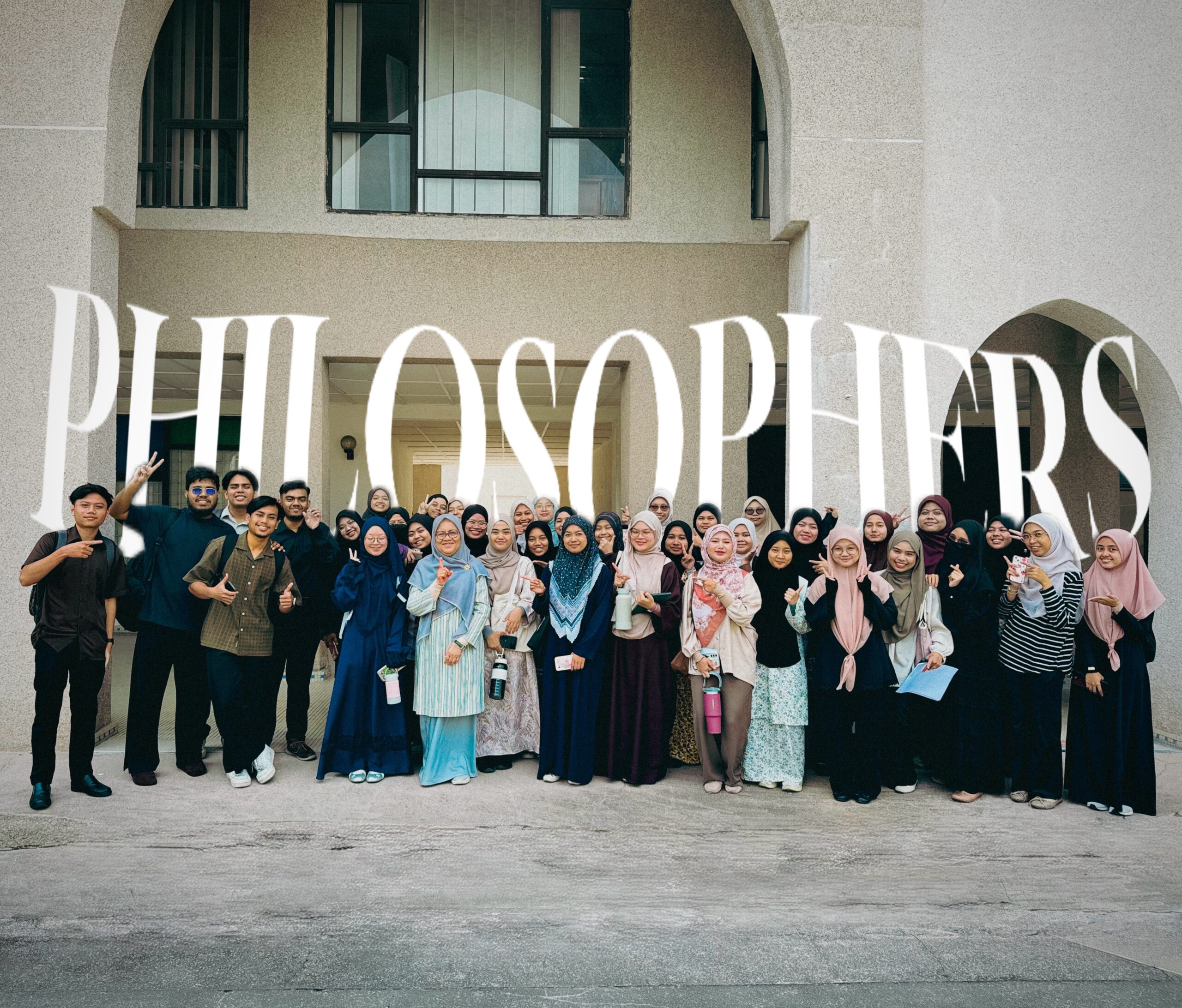
The accompanying exuberant class picture from the last day of class, with the word ‘PHILOSOPHERS’ in the background, shows that learning philosophy can be as fun as it is meaningful. I would conclude that when the intention to understand reality is paramount, no learning is impossible.***
Dr. Megawati Moris is Associate Professor at the Department of Usul al-Din and Comparative Religion and Philosophy, AHAS Kulliyyah of Revealed Knowledge and Human Sciences, International Islamic University Malaysia, Gombak.

- Knowledge Transfer on Stingless Beekeeping and Downstream Product to Empower the Communities - August 3, 2026
- Growing Together: How IIUM and Kebun Bandar Sungai Bunus Cultivate More Than Just Green Spaces - August 3, 2026
- Khalifah Nisa’: Reclaiming Women’s Role as Guardians of Creation - August 3, 2026