By, Hira Mushtaq
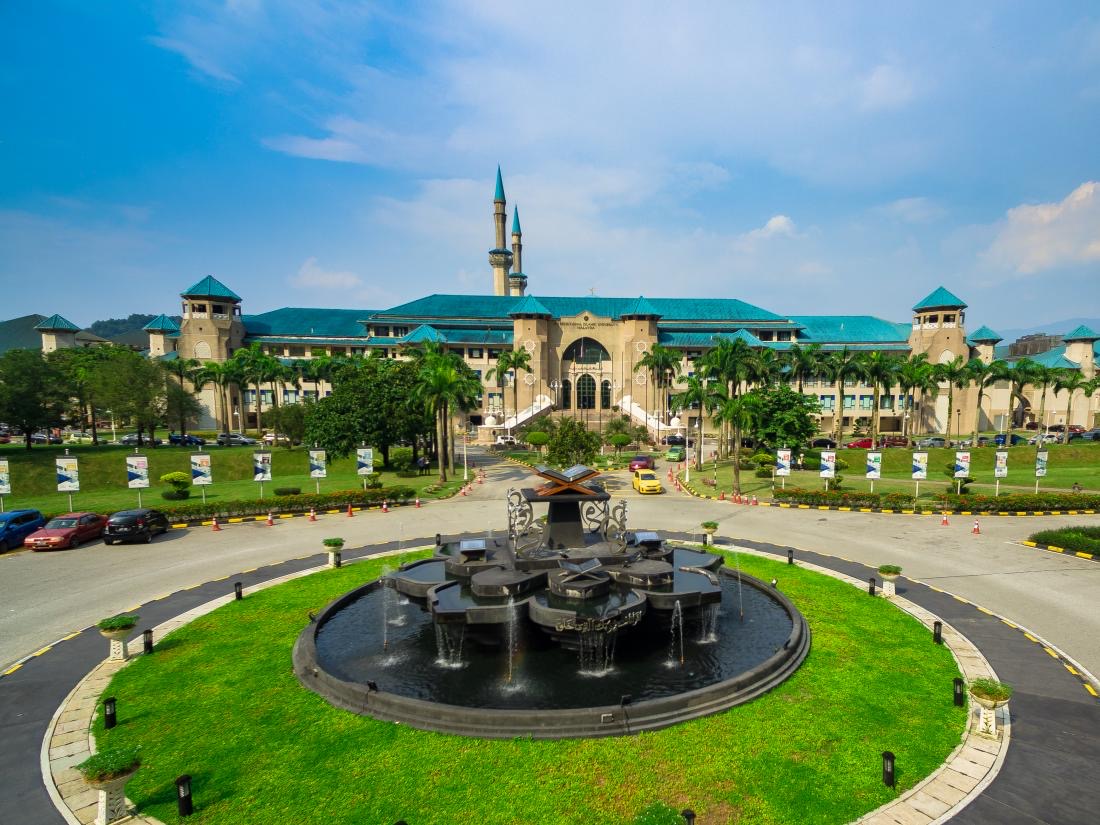
This article is based on an in-depth academic interview conducted with Professor Dr. Mohd Mumtaz Ali, a senior member of the academic staff at the International Islamic University Malaysia (IIUM) and a distinguished scholar in Islamic thought, Islamic worldview, and the Islamization of Human Knowledge (IOHK). The interview sought to document and analyze Professor Mumtaz Ali’s scholarly reflections on IIUM as a contemporary model of comprehensive, holistic, and integrated education.
While the original discussion took the form of a structured interview, the present article has been developed by thematically organizing and analytically presenting the insights, explanations, and responses offered by Professor Dr. Mohd Mumtaz Ali. His views are retained in substance and intent, while the interview format has been transformed into a coherent scholarly narrative suitable for academic and institutional publication.
Since its establishment in 1983, IIUM has aspired to offer an alternative model of higher education grounded in the Islamic philosophy of knowledge and education. Conceived as an institution committed to comprehensive, holistic, and integrated learning, IIUM seeks to harmonize intellectual excellence with spiritual depth and moral responsibility. Within contemporary debates on education—often dominated by secular and materialistic paradigms—IIUM represents a distinctive attempt to reorient knowledge, pedagogy, and research within a tawhidicframework.
Philosophical Foundations of IIUM’s Educational Model
IIUM’s philosophy of education is firmly rooted in the Islamic philosophy of knowledge as outlined in its official policies and Islamisation guidelines. This philosophy was developed consciously as an alternative to dominant Western secular models of higher education, which often prioritize material progress while marginalizing spiritual and moral dimensions of life. At IIUM, education is understood as a value-laden enterprise guided by a coherent worldview rather than as a neutral or purely technical activity.
Accordingly, all disciplines at IIUM are taught through a critical and comparative approach that engages both Western and Islamic intellectual traditions. Students are exposed to the assumptions, methodologies, and conclusions of modern knowledge systems alongside Islamic perspectives. Through this engagement, they are encouraged to evaluate competing worldviews rationally and critically, leading to an awareness of the limitations of materialistic philosophies and a deeper appreciation of the spiritual and moral vision offered by Islam.
The Islamic Worldview and the Direction of Education
The vision and direction of education at IIUM emerge from the Islamic worldview, which emphasizes critical inquiry, rational reflection, and the rejection of blind imitation. Knowledge is not transmitted through indoctrination; rather, it is pursued through openness to inquiry and evidence-based reasoning. The Islamic worldview recognizes multiple sources of knowledge, including revelation, reason, observation, experimentation, and historical experience.
Within this integrated framework, students are guided to understand reality in a balanced and comprehensive manner. The Islamic worldview is presented not as a dogmatic construct but as a universal, practical, and coherent perspective capable of explaining life, knowledge, and existence more adequately than fragmented secular approaches.
Centrality of Islamic Revealed Knowledge (IRK)
A defining feature of IIUM’s educational framework is the central role accorded to Islamic Revealed Knowledge (IRK). Within the Islamic worldview, IRK is understood as True, Authentic, and Universal Knowledge (TAUK), encompassing both physical and metaphysical dimensions of reality. It is therefore considered logical and rational to ground all processes of knowledge acquisition, development, and dissemination in IRK.
At IIUM, IRK functions as the foundational epistemological guide that informs curricula, research agendas, and institutional practices. Knowledge is not pursued on the basis of speculative or false worldviews; instead, it is aligned with the truth and reality of life and the world. This approach ensures that education remains meaningful, purposeful, and ethically grounded.
Tawhidic Epistemology as a Guiding Framework
In recent years, IIUM has placed renewed emphasis on tawhidic epistemology as the guiding principle of its educational system. Tawhidic epistemology affirms Allah SWT as the ultimate source of knowledge, wisdom, values, and moral criteria. Within this framework, distinctions between true and false, right and wrong, and desirable and undesirable are grounded in divine guidance.
This emphasis arises from critical analyses of modern academic disciplines, which reveal their deep entanglement with Western secular and positivist epistemologies. Tawhidic epistemology, grounded in IRK or TAUK, offers an alternative that is free from metaphysical conjecture and philosophical speculation. By placing IRK at the highest epistemological level, IIUM seeks to ensure coherence, authenticity, and moral integrity across all areas of knowledge and education.
Holistic Integration of Knowledge and Life
IIUM’s commitment to the Islamic worldview necessitates an understanding of life and society as holistic and integrated realities. The artificial separation between secular and religious domains is rejected. Instead, life is conceived as a unified whole in which material, ethical, and spiritual dimensions are inseparably connected. Within this vision, worldly life is understood as a means toward success in the Hereafter, and no aspect of human activity is considered morally neutral. Teaching and research are therefore conducted by scholars who possess competence in both Islamic and Western intellectual traditions, enabling a balanced, critical, and integrative engagement with contemporary knowledge.
Spirituality, Moral Character, and Education
In the IIUM educational framework, spirituality and moral excellence constitute the starting point of education rather than its by-products. These dimensions are regarded as fundamental realities of human existence and essential foundations of knowledge. Education is thus conceived as a transformative process aimed at nurturing moral consciousness, spiritual awareness, and a deep sense of purpose. By cultivating virtuous character and ethical responsibility, IIUM seeks to produce graduates who embody intellectual excellence alongside moral integrity. This integrated approach ensures that education contributes not only to professional competence but also to holistic human development.
Academic Excellence and Global Standards
IIUM maintains a strong commitment to academic excellence and global scholarly standards. Guided by revealed truth and moral responsibility, the university views all academic endeavours as acts of trust and accountability before Allah SWT. Spiritual, ethical, and intellectual dimensions are integrated within a single holistic framework. This commitment enables IIUM to engage confidently with global academic discourses while remaining faithful to Islamic values. Balance, integrity, and excellence are thus sustained without compromising the university’s foundational principles.
Contribution to Individual and Societal Development
IIUM’s integrated educational model aims at the holistic development of individuals and society. Active engagement with worldly life is viewed as an extension of spiritual commitment rather than a distraction from it. Intellectual, physical, and social activities are all undertaken with ethical intention and moral purpose. Through this approach, IIUM affirms the unity of worldly responsibility and spiritual fulfillment, contributing to the development of individuals capable of addressing societal challenges while remaining oriented toward success in the Hereafter.
Knowledge Creation within an Integrated Islamic Framework
An integrated Islamic framework at IIUM is not confined to religious instruction. Rather, it represents a comprehensive worldview validated through rational arguments, empirical evidence, and historical realities. This framework is capable of generating new knowledge, theories, models, and institutions aimed at addressing contemporary crises and promoting human well-being. By rejecting blind imitation of failing paradigms and encouraging critical thinking and principled innovation, IIUM positions itself as a contributor to the advancement of knowledge and civilization within a sound and authentic Islamic framework.
IIUM stands as a pioneering model of comprehensive, holistic, and integrated education grounded in the Islamic philosophy of knowledge. Through its commitment to IRK, tawhidic epistemology, spiritual and moral development, and academic excellence, the university offers a coherent alternative to fragmented educational paradigms. As articulated by Professor Dr. Mohd Mumtaz Ali, IIUM continues to uphold truth, cultivate integrity, and contribute meaningfully to the intellectual and moral development of individuals and society.***
Hira Mushtaq is a research scholar from department of Usul al-Din, Comparative Religion, and Philosophy, AHAS KIRKHS, IIUM.

- Knowledge Transfer on Stingless Beekeeping and Downstream Product to Empower the Communities - August 3, 2026
- Growing Together: How IIUM and Kebun Bandar Sungai Bunus Cultivate More Than Just Green Spaces - August 3, 2026
- Khalifah Nisa’: Reclaiming Women’s Role as Guardians of Creation - August 3, 2026