By, Md Maruf Hasan
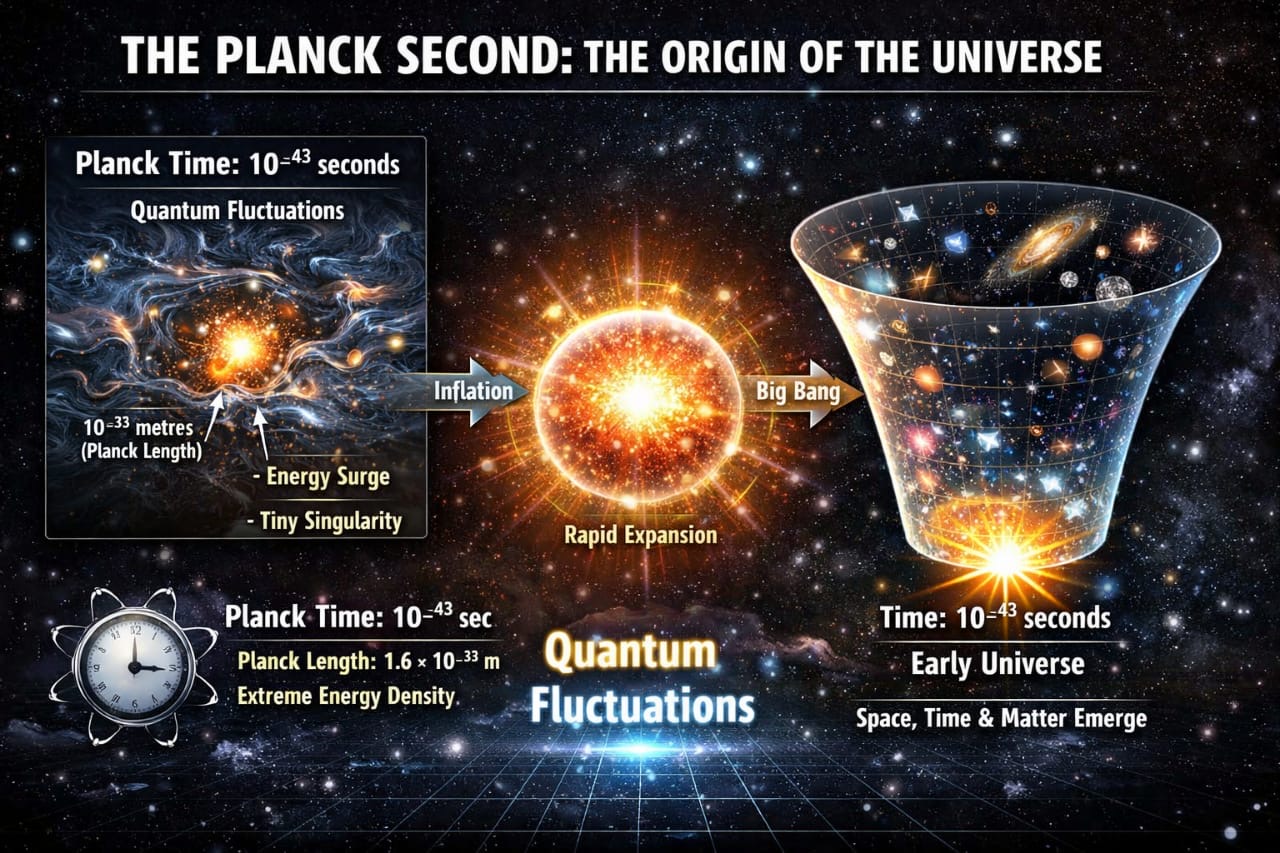
Stephen Hawking is widely known for his popular science books A Brief History of Time and The Grand Design. As a prominent science communicator, he also made philosophical and theological claims. One of his famous assertions, influenced by New Atheistic thought, was that God had no time to create the universe because it began in a Planck second—the smallest measurable unit of time. This essay critically analyzes this claim from an Islamic perspective.
First, human experience itself shows that communication requires time and medium. For example, when someone is hungry in Malaysia, they might say “Saya nak makan” or “Lapar lah.” These phrases take different amounts of time to pronounce. Similarly, in English, saying “I need to eat” or “Very hungry” also takes time. Moreover, speech must travel through a medium—air—so another person can hear it. If someone speaks on the Moon, where there is no air, the sound cannot be transmitted. When we use a phone, speech is converted into electromagnetic waves by transistors and then reconstructed as sound for the listener.
These examples demonstrate that human communication is constrained by physical laws, time, and media. However, applying these limitations to God is a category error.
Consider the Qur’anic account of Prophet Ibrahim (Abraham) being thrown into fire. According to natural laws, intense fire should burn him. Yet the Qur’an states:
قُلْنَا يَـٰنَارُ كُونِى بَرْدًۭا وَسَلَـٰمًا عَلَىٰٓ إِبْرَٰهِيمَ
“We ordered, ‘O fire! Be cool and safe for Abraham!’” (Qur’an 21:69)
Fire does not understand Arabic, nor does it recognize Ibrahim. If we interpret God’s command in a humanistic and mechanistic way—imagining God speaking, sound waves traveling, and fire responding—Hawking’s argument would imply that God had no time to intervene. But this interpretation misunderstands the nature of divine action in Islam.
The Qur’an emphasizes that God is not bound by physical distance or time:
وَنَحْنُ أَقْرَبُ إِلَيْهِ مِنْ حَبْلِ ٱلْوَرِيدِ
“We are closer to him than his jugular vein.” (Qur’an 50:16)
Human knowledge of reality is extremely limited. For instance, quantum entanglement shows that two particles can influence each other instantly across vast distances. Even physicists admit that the mechanism behind this phenomenon is not fully understood. This indicates that instantaneous non-local interactions exist in nature, challenging classical notions of time and space.
Therefore, when Hawking claims that God had no time to create the universe, this reflects the limitations of human scientific frameworks rather than a definitive metaphysical truth. The Qur’an describes divine creation as:
إِنَّمَآ أَمْرُهُۥٓ إِذَآ أَرَادَ شَيْـًٔا أَن يَقُولَ لَهُۥ كُن فَيَكُونُ
“When He wills something, He only says to it, ‘Be!’ and it is.” (Qur’an 36:82)
This does not imply literal speech as humans understand it. Rather, it expresses divine causation beyond human language and physics. God sends messengers in human languages so people can understand revelation, but divine action itself is not constrained by human perception.
In conclusion, Hawking’s argument assumes that divine action must follow human temporal and physical constraints. Islamic theology, however, maintains that God transcends time, space, and physical causality. Thus, the Planck-time argument does not negate divine creation; instead, it highlights the epistemological limits of human science when addressing metaphysical questions.***
Dr. Md Maruf Hasan is a postgraduate student from Department of Usul al-Din and Comparative Religion and Philosophy,AHAS IRKHS International Islamic University Malaysia.

- Knowledge Transfer on Stingless Beekeeping and Downstream Product to Empower the Communities - August 3, 2026
- Growing Together: How IIUM and Kebun Bandar Sungai Bunus Cultivate More Than Just Green Spaces - August 3, 2026
- Khalifah Nisa’: Reclaiming Women’s Role as Guardians of Creation - August 3, 2026