By, Huwaidah Hisham
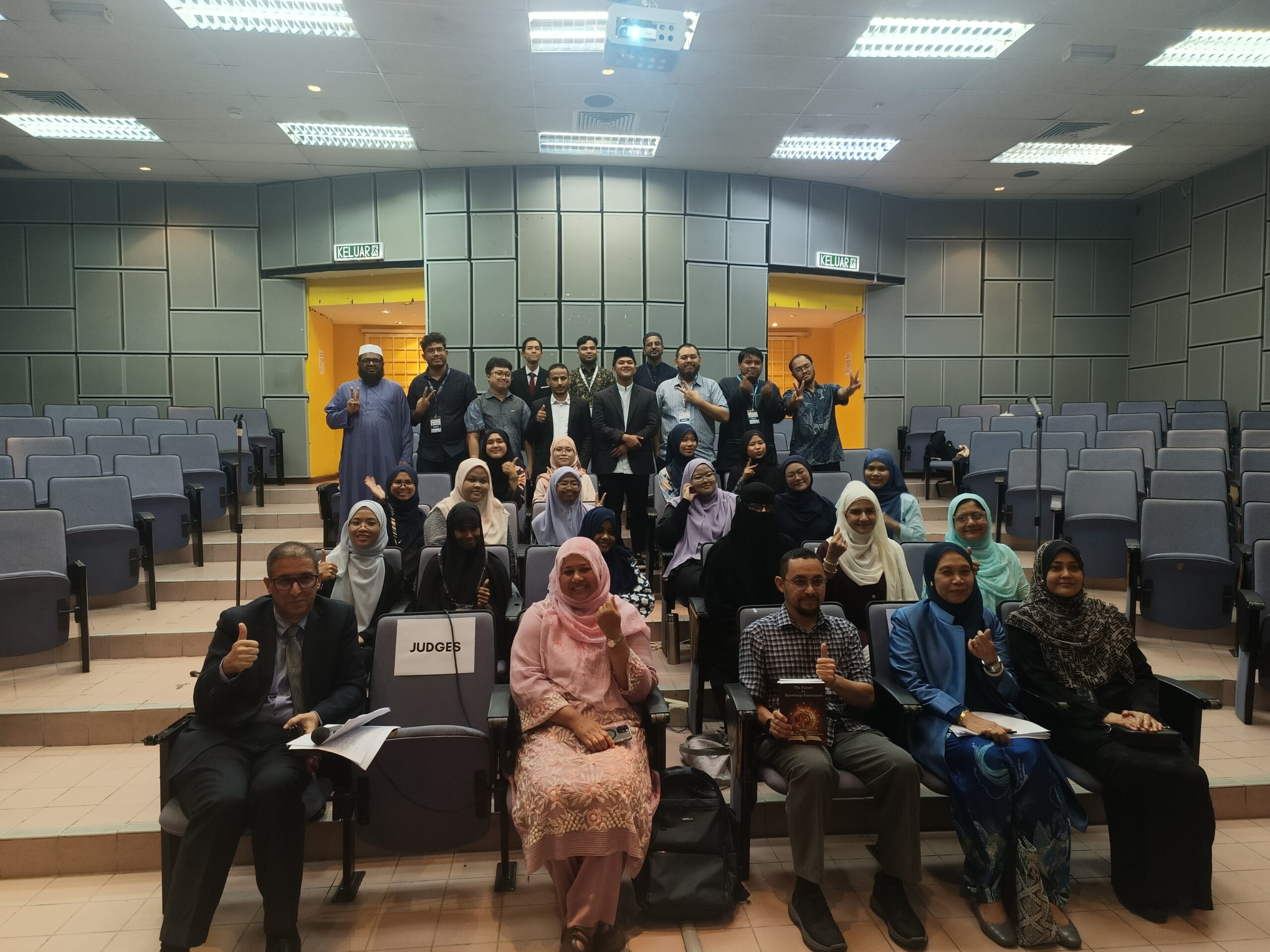
GOMBAK, 19 May 2026: Department of Sociology and Anthropology, Women For Progress and Research Unit and Secretariat of Sociology and Anthropology (SOCASA) collaborated in conducting the Graduate Scholars Colloquium 2026 (GSC) in conjunction with AHAS KIRKHS Inspire Week 2026 on 18th May 2026, from 8.00 am until 1.00 pm at Mini Auditorium, International Islamic University Malaysia (IIUM). The event also served as a required event for SOCA 7508 Graduate Seminar.
With the theme ‘Reimagining the Human: Gender, Ethics, Society, and the AI Revolution’, this colloquium provided a platform for the graduate students to share their research and findings on AI, ethics, society and gender through the lens of sociology and anthropology.
A total of 14 research presentations were delivered across three sub-themes which are Theme 1: AI and the Human, Theme 2: The Islamic Vision and the 4.0 Industrial Revolution and Theme 3: Redefining Muslim Womanhood.
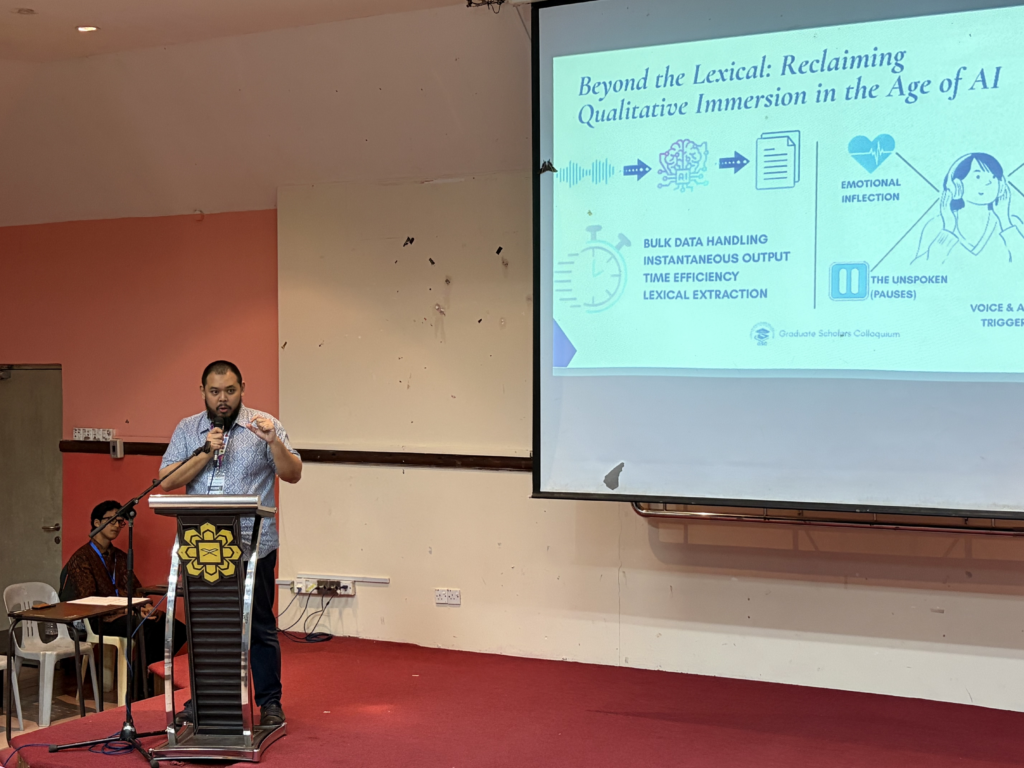
Main committee of the Graduate Scholars Colloquium 2026 (GSC), Syed Harris Irsyad Bin Syed Hassan Nazari underscored the motivation behind the event, noting the growing need for a humanities-centred perspective on AI discourse.
“The advanced development of AI is very rapid and we realized that we need an answer from a social science and humanities point of view because a lot of the discourse on AI is very technical and we’re missing that component of the perspective of the social science”,he said.
Syed Harris added that the discussion includes the Tawhidic epistemology where the discussion strives for the understanding of the topics from the Tawhidic perspective.
The colloquium also featured a keynote address by Dean of AHAS KIRKHS, Prof. Dr. Hafiz Zakariya, who highlighted how human meaning, moral responsibility and spiritual purposes can be preserved while navigating the industrial and AI revolution. He further emphasized that reimagining the human, gender, ethnic, society and the AI revolution was not simply about technology but it was also about the civilization created by the human being with values and the soul of humanity.
“We are the shapers of civilization. Definitely, AI and technology will be there. But more importantly, modern technological systems often reduce human beings to measurable patterns, data points, consumer behavior”,he said.
In addition, the Chairperson of Graduate Scholars Colloquium (GSC) 2026 and course instructor of SOCA 7508 Graduate Seminar, Assoc. Prof. Dr. Rohaiza Rokis highlighted that this colloquium was meaningful in showcasing the commitments of the scholars and researchers to critically examine the changes from the perspective of the social sciences and humanity. “The ideas shared today remind us that technological advancements must always be guided by ethical responsibility, inclusivity, and human dignity”, she said.
She expressed hope the colloquium can be the space for intellectual growth, interdisciplinary collaboration, meaningful reflection and continue to contribute for future research, publications, collaborations and community engagement.
Hence, the colloquium concluded as a vital platform for intellectual exchange, reinforcing the importance of grounding technological progress in ethical, societal, and Islamic values. It successfully highlighted that while the AI revolution is reshaping the world, it remains essential to keep the human experience, dignity, and moral responsibility at the forefront of this digital transformation.***
