By, Dr. Siti Ramizah Khairunnisa Mohd Radz
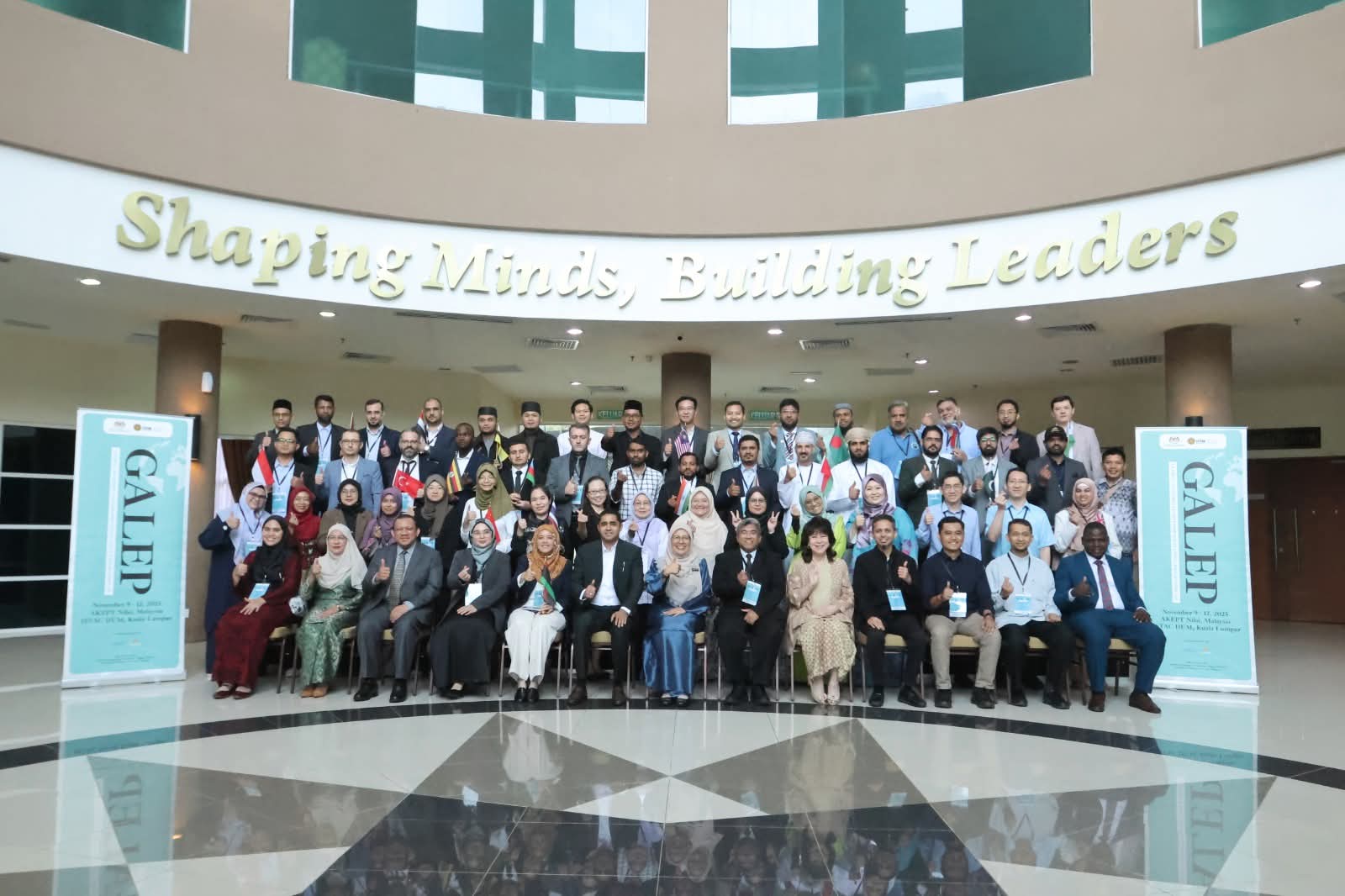
The realm of higher education is facing the swift advancement of globalisation, technology, and societal change. The Global Academic Leadership Excellence Programme (GALEP) 2.0 is a significant project that enhances the role of academics in fostering leadership grounded in rahmatan lil-alamin.
The joint programme conducted by the International Islamic University Malaysia (IIUM)
and the Academy of Higher Education Leadership (AKEPT) held from 9 to 12 November 2025 in AKEPT, Nilai, and ISTAC-IIUM, Kuala Lumpur.
This four-day event gathered over 60 participants from diverse local and international
higher education institutions to explore, strategise, and establish a novel paradigm of
global academic leadership grounded in human values and universal well-being.
Prospects of Tertiary Education
The academic profession in the context of global competition necessitates increased
flexibility and ongoing innovation while upholding human values. To ensure the success of this concept, each participant receives training in developing a sustainable strategic plan to enhance the resilience of universities.
Academic leadership ought to concentrate on direction, values, and ethics. True leadership entails not the possession of power, but the accountability for knowledge and the efficacy of its dissemination to society.
The impact of artificial intelligence (AI), which is expected to dominate the industry in the next decade, is a topic of intense discussion within Industrial Revolution 5.0. The foundation of AI adaptation is humanity itself.
Academic leaders must courageously reconcile idealism with reality and knowledge with compassion (human-centered adaptation). A leader must consistently pursue knowledge, cultivate listening skills, and practice empathy.
The future of higher education is characterised by global uncertainty. It is therefore recommended that academic leaders continue to pledge to be change agents, transforming universities into hubs for the development of morality and character as well as knowledge.
A Discourse between Nations
A primary value associated with GALEP 2.0 is the exceptional chance for cross-cultural dialogues between nations. Twenty-one participating countries, including Azerbaijan, Brunei Darussalam, Bangladesh, Uzbekistan, India, and Fiji, offered their experiences of managing higher education institutions across diverse social and cultural settings.
From the discussions in the forum and workshops revealed that all education systems encounter similar issues, specifically that knowledge is the foundation of human advancement, rather than only fulfilling market demands. Disparities in policy, economic regulations, and cultural constraints are realities that must be addressed strategically.
This meeting has initiated several minor collaborations, demonstrating that GALEP 2.0 serves as a platform for generating ideas, opportunities, and regional cooperation. Academic leadership goes beyond mere decision-making; it serves as an agent to deliver successful practices.
Reflection
GALEP 2.0 is more than an academic training programme; it embodies a knowledge movement that integrates wisdom with professionalism. This programme demonstrates that academia may serve as an intellectual and spiritual conduit, fostering networks and cultivating a commitment to world service through the implementation of Islamic principles.
GALEP 2.0 has cultivated a legacy of scholarly leaders. The collaborative fostered among participants from 21 countries in AKEPT and ISTAC will continue inclusively in shaping a constructive institutional future. ***
Dr. Siti Ramizah Khairunnisa Mohd Radzi serves as an Assistant Professor in the
Department of Communication at AHAS KIRKHS and the Rapporteur for GALEP 2.0.

- Knowledge Transfer on Stingless Beekeeping and Downstream Product to Empower the Communities - August 3, 2026
- Growing Together: How IIUM and Kebun Bandar Sungai Bunus Cultivate More Than Just Green Spaces - August 3, 2026
- Khalifah Nisa’: Reclaiming Women’s Role as Guardians of Creation - August 3, 2026