By, Adibah Amir
What began as a school trip became a journey into nature, science, and sustainability.
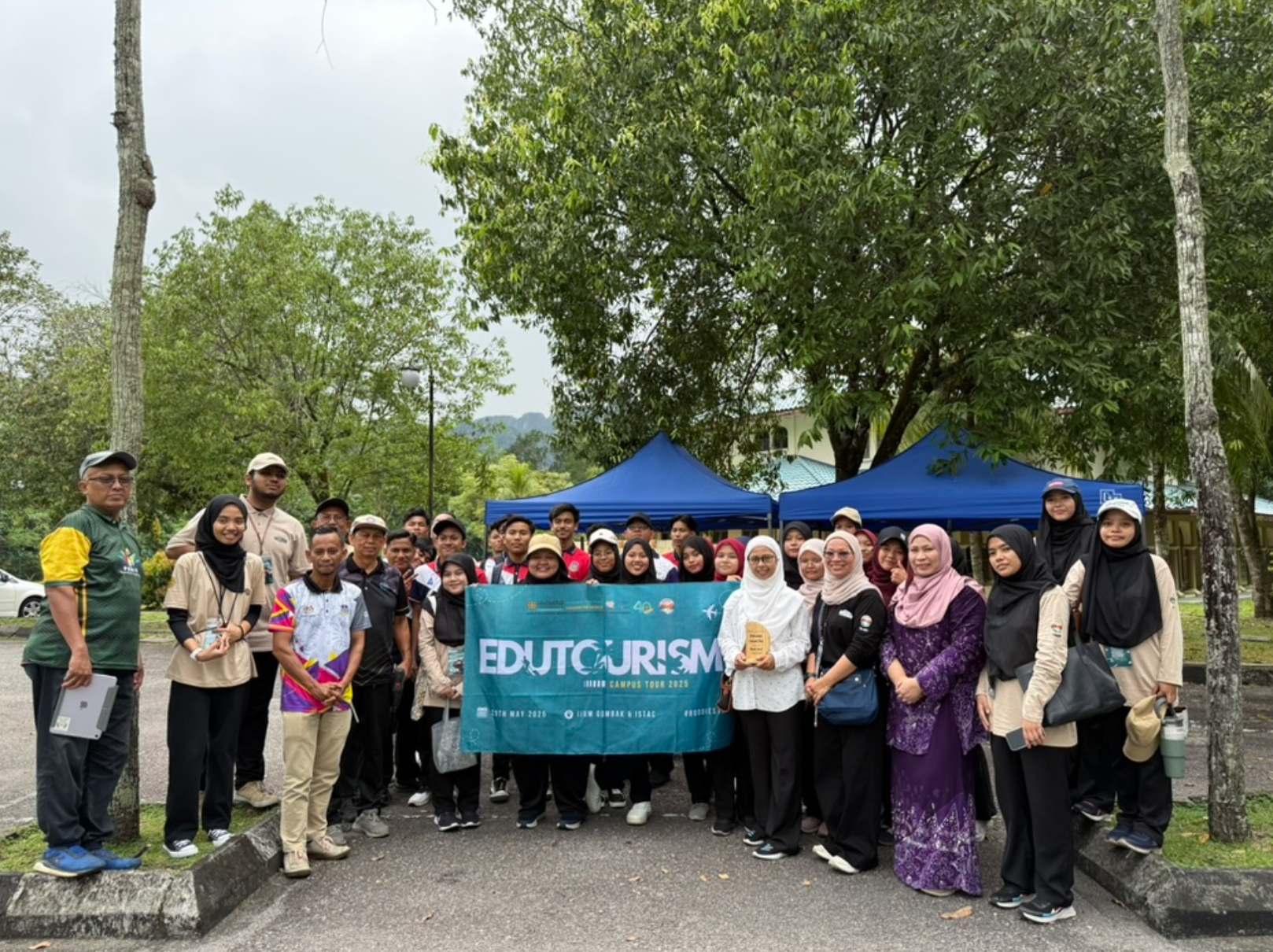
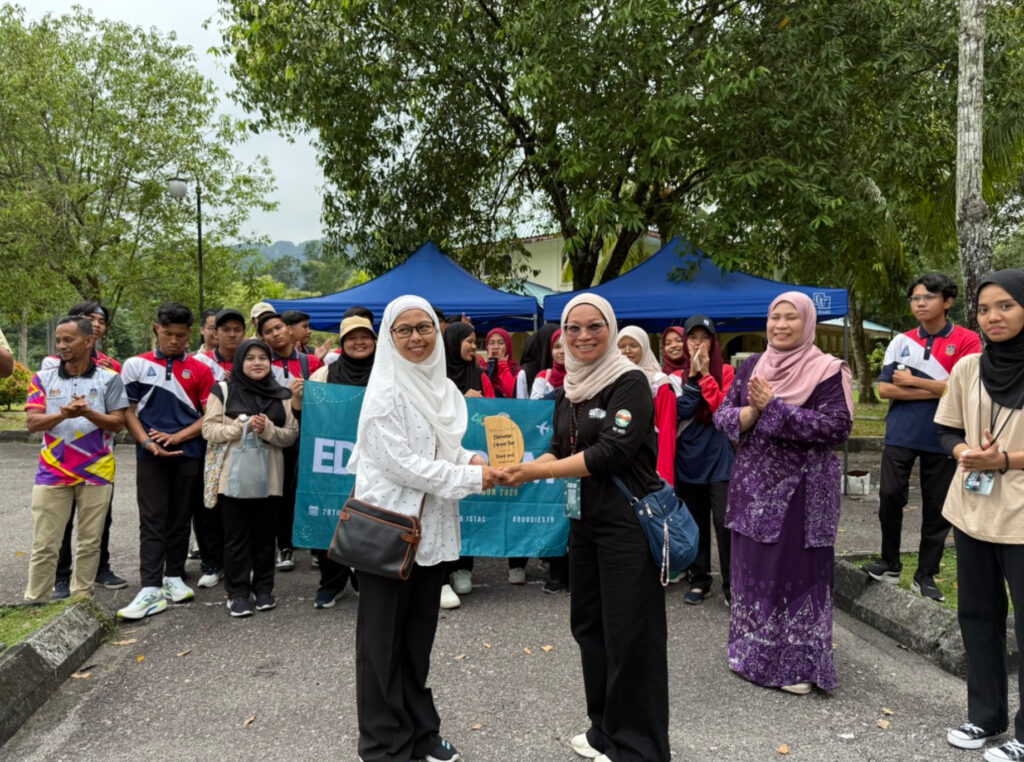
On 29th May 2025, a group of 37 students and teachers from SMK Sultan Alauddin Riayat Shah, Johor, arrived at IIUM’s Rectory Hill as part of an Edu tourism visit to the university’s Stingless Bee Sanctuary. The program was organised by the Edu-Tourism team from the Kulliyyah of Sustainable Tourism and Contemporary Languages (KSTCL), IIUM Pagoh, with support from the Kelulut Research Group. The Transport Unit has kindly provided eco-friendly buggy services throughout the visit.
The event kicked off at 9:00 am with a warm welcome and a knowledge-sharing session on stingless bee conservation by Kelulut Research Group, where participants learned about the vital role these tiny pollinators play in preserving ecosystems and supporting sustainable agriculture. The Kelulut Research Group also shared their journey in promoting stingless bee awareness through research, innovation, and community engagement.
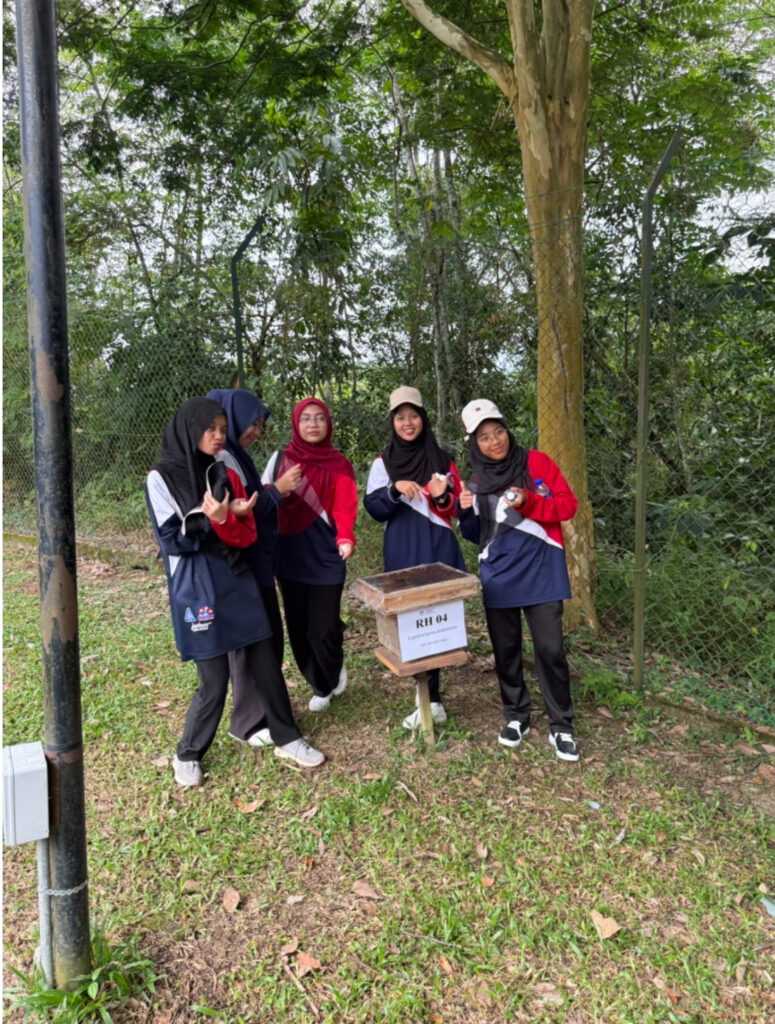
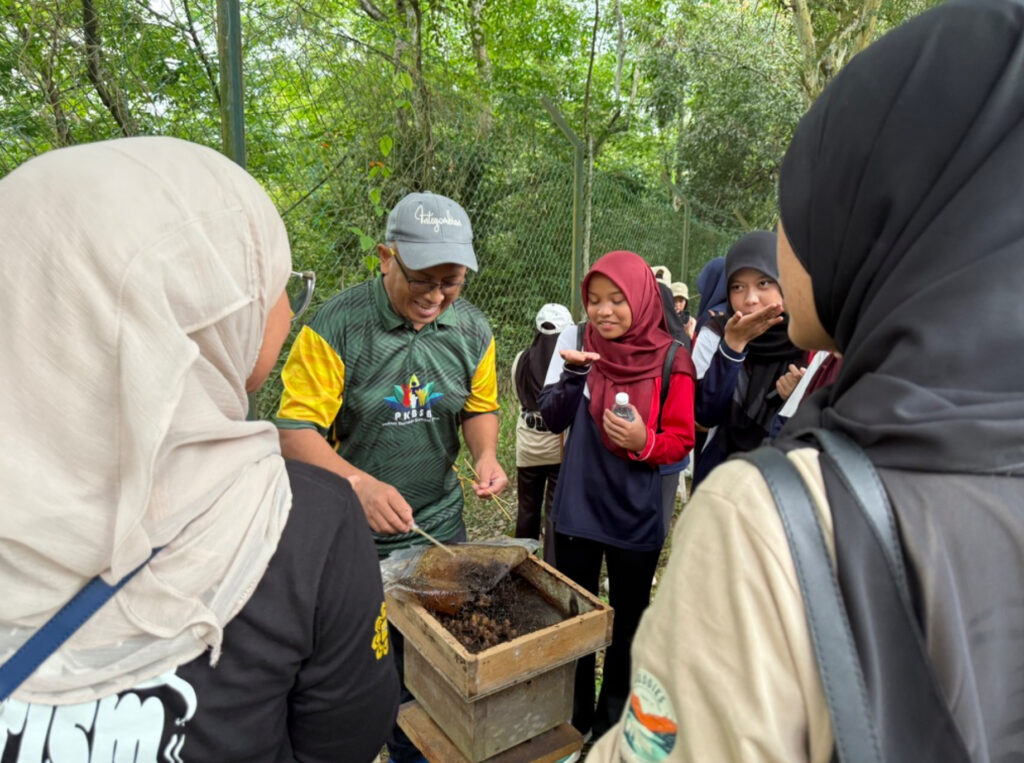
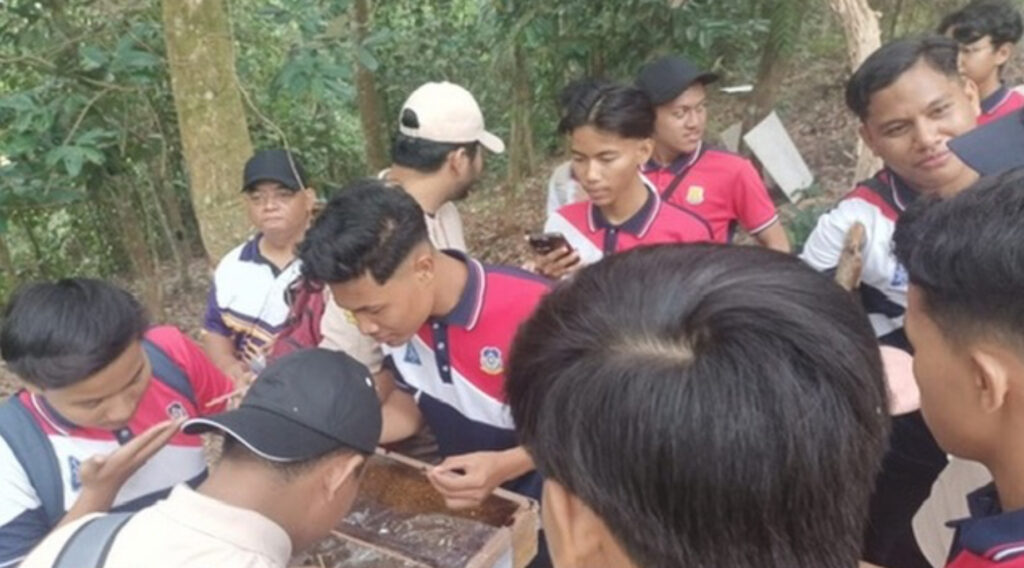
The highlight of the visit was a hands-on honey harvesting activity, where students were divided into smaller groups to engage closely with the hives. They were given the special opportunity to taste fresh honey from several species of stingless bees, including the rare Heterotrigona bakeri, Heterotrigona doipansis, and the delicate dammar species of Tetragonula apicalis and Tetragonula binghami. Each variety offered a distinct taste and aroma, enriching the students’ understanding of biodiversity and natural produce.
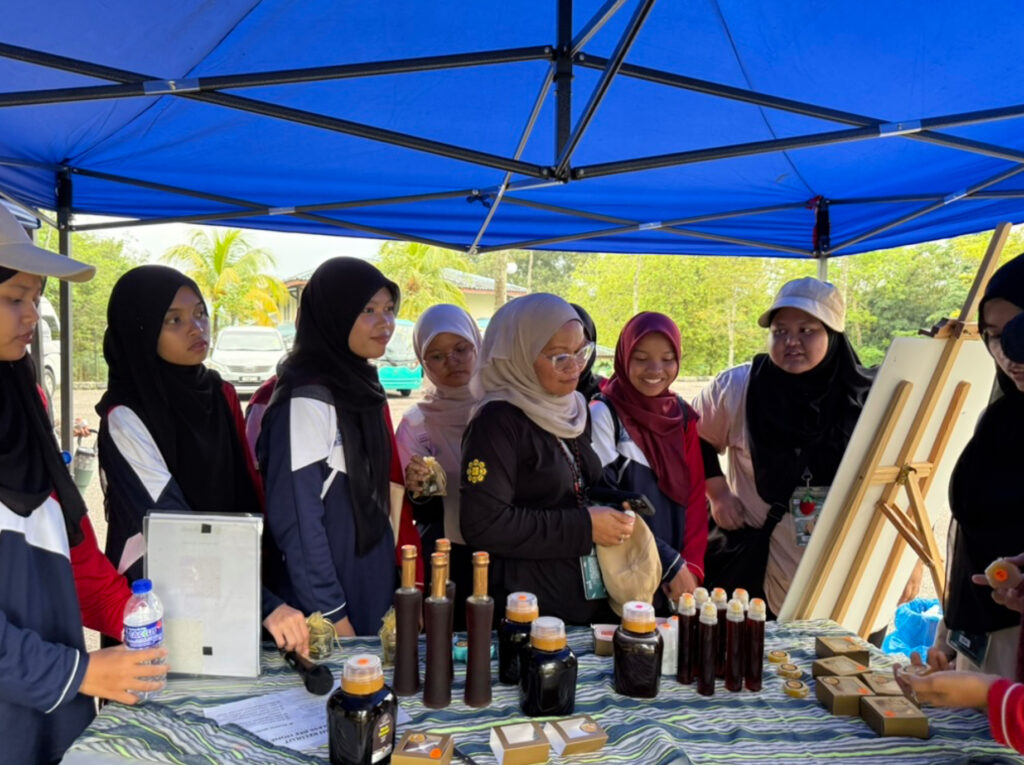
Participants also explored the research and development efforts by the Kelulut Research Group, particularly in designing sustainable hive systems, improving harvesting technology, and enhancing product quality for the local stingless bee honey industry. They were introduced to a range of innovative downstream products developed by Kelulut Research Group, such as facial honey soap, body scrub soap infused with bee bread extract, propolis-based skin balm, moisturising honey lip balm, and antioxidant propolis roll-on for body odour. These products illustrated how local resources can be transformed into value-added, health-conscious items, merging traditional knowledge with modern applications in wellness and cosmetics.
The visit concluded at the Kulliyyah of Engineering courtyard at 10.30 am, where participants could witness size comparison between two notable stingless bee species, Geniotrigona thoracica, known as the largest stingless bee species at approximately 8 mm in length and Tetragonula leaviceps, one of the smallest, measuring around 3.6 mm. This striking visual contrast left a lasting impression on visitors and sparked vibrant discussions about species diversity and habitat conservation.
Beyond biology and business, the visit was rooted in IIUM’s Sejahtera academic philosophy linking knowledge to action. It showcased how edutourism can empower youth to become changemakers, not only by learning in nature, but also by carrying values of environmental responsibility, community upliftment, and Islamic stewardship (khalīfah fil-ard).
With the dedicated efforts of KSTCL’s Edu-Tourism team, this initiative successfully bridged campuses, disciplines, and communities, showcasing how sustainable tourism can be a powerful platform for education, inspiration, and action.***
(These are views of Dr. Adibah Amir, who is affiliated with the Department of Manufacturing and Materials Engineering, Kulliyyah of Engineering, International Islamic University Malaysia, which do not represent IIUMToday’s.)

- Knowledge Transfer on Stingless Beekeeping and Downstream Product to Empower the Communities - August 3, 2026
- Growing Together: How IIUM and Kebun Bandar Sungai Bunus Cultivate More Than Just Green Spaces - August 3, 2026
- Khalifah Nisa’: Reclaiming Women’s Role as Guardians of Creation - August 3, 2026