By, Siti Sufiah binti Mohd Rasidan
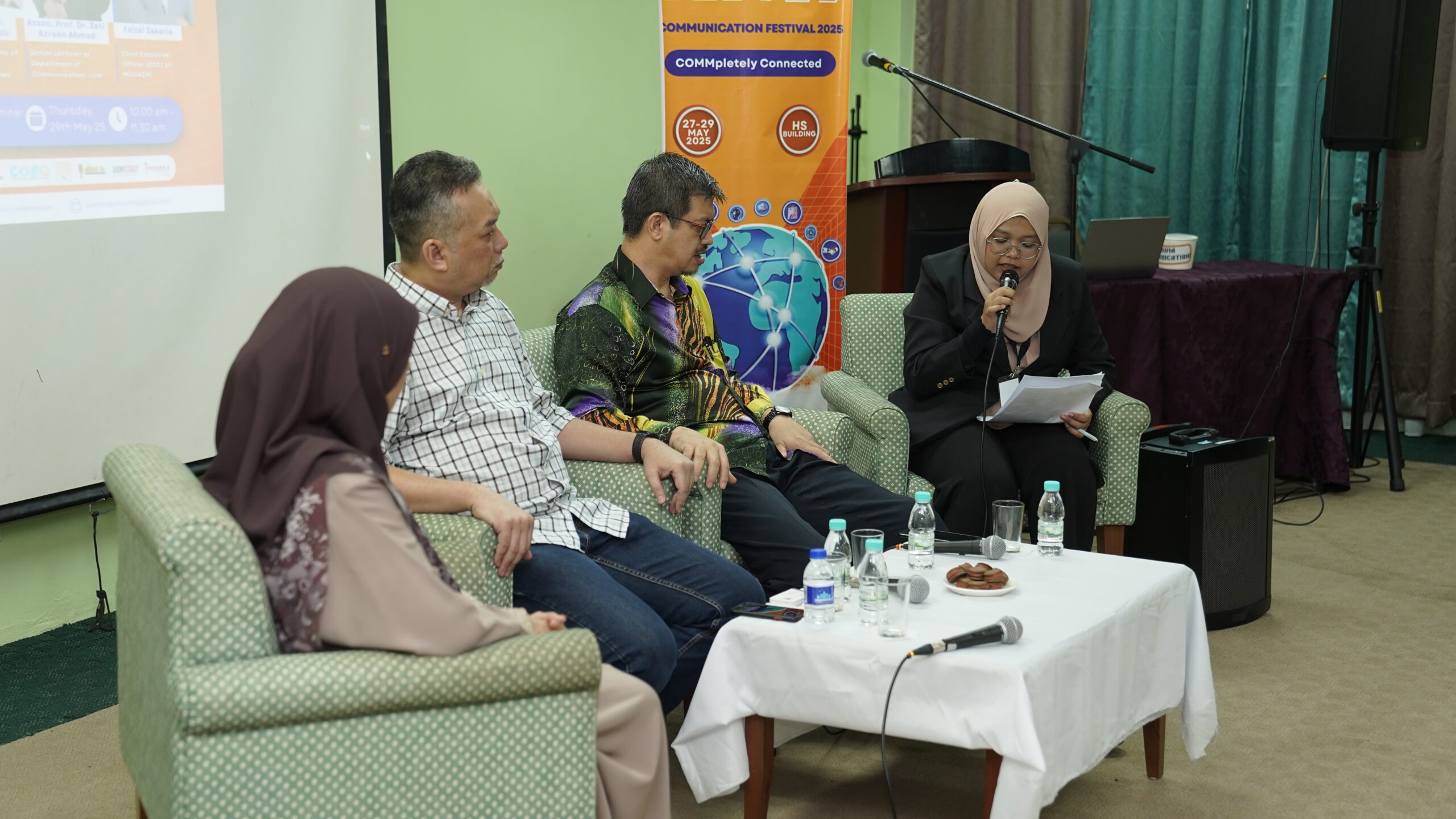
Gombak, 29 May 2025: On Thursday, 29 May 2025, AbdulHamid AbuSulayman Kulliyyah of Islamic Revealed Knowledge and Human Sciences (AHAS KIRKHS) at the International Islamic University Malaysia (IIUM) hosted a thought-provoking forum titled, “Muslim Brands and Digital Marketplace: Opportunities, Challenges and Identities.” The event brought together three distinguished speakers from different backgrounds who offered valuable insights into the evolving landscape of Muslim branding in the digital age.
As social media continues to dominate as the primary platform for connection, communication, and commerce, the forum examined how the digital marketplace is not only transforming business models but also reshaping brand identity and consumer engagement. For Muslim entrepreneurs and companies, these changes present both opportunities and ethical challenges, particularly in ensuring that business practices remain aligned with Islamic principles.
Branding, as emphasized throughout the session, is more than just logos or slogans. It is the identity and perception that a business cultivates. Addressing the audience, Assoc. Prof. Dr. Badri Najib Zubir, Dean of IIUM Academy of Graduate and Professional Studies, explained the importance of distinguishing between a brand merely owned by Muslims and one that is truly Islamically acceptable. “What is Islamically acceptable does not necessarily mean it has to come from a Muslim,” he stated.
According to Dr. Badri, a genuinely Islamic brand must uphold transparency, integrity, and ethical values in its dealings. He stressed the significance of maintaining professionalism through digital platforms such as websites and social media channels, which serve as the primary touchpoints between businesses and their audiences. “Business is about selling solutions to people who have problems. Those who give you money have expectations which you must deliver,” he added.
The forum also featured Assoc. Prof. Dr. Zeti Azreen Binti Ahmad, Head of the Department of Communication, who highlighted the importance of consistent and conscious communication on digital platforms. “People are observing what you say and how you interact,” she said. “With social media, you are engaging with stakeholders, not just broadcasting information.” Her comments underscored the role of digital transparency and active engagement in building consumer trust which is especially vital for brands that carry the Muslim label.
Assoc. Prof. Dr. Zeti emphasized that with increased visibility comes greater responsibility. Businesses must align not only their messaging but also their interactions with the ethical expectations of their audiences, especially when operating under the identity of a faith-conscious brand.
Faizal Zakaria, CEO of the fashion brand MODACHI, brought a practical industry perspective to the discussion. He stressed that while Islamic values form an important foundation, brands must also be adaptable to survive in a competitive global market.“ A brand could never sustain if it is based on sentiment only,” he remarked. He urged Muslim entrepreneurs to innovate and cater to broader audiences rather than limiting their products or services to niche markets. Inclusivity, adaptability, and cultural awareness are essential for longevity, especially in the fast-evolving digital economy.
The forum concluded with a shared understanding that Muslim brands have a unique opportunity: to lead by example in creating ethical, inclusive, and innovative business models. By harnessing the power of digital tools while upholding Islamic values, these brands can build not only profitable enterprises but also lasting social impact. Audiences who came to listen to the forum gained a lot of valuable insights that may be helpful for them in the future.***
