By, Mohamed Fouz Mohamed Zacky
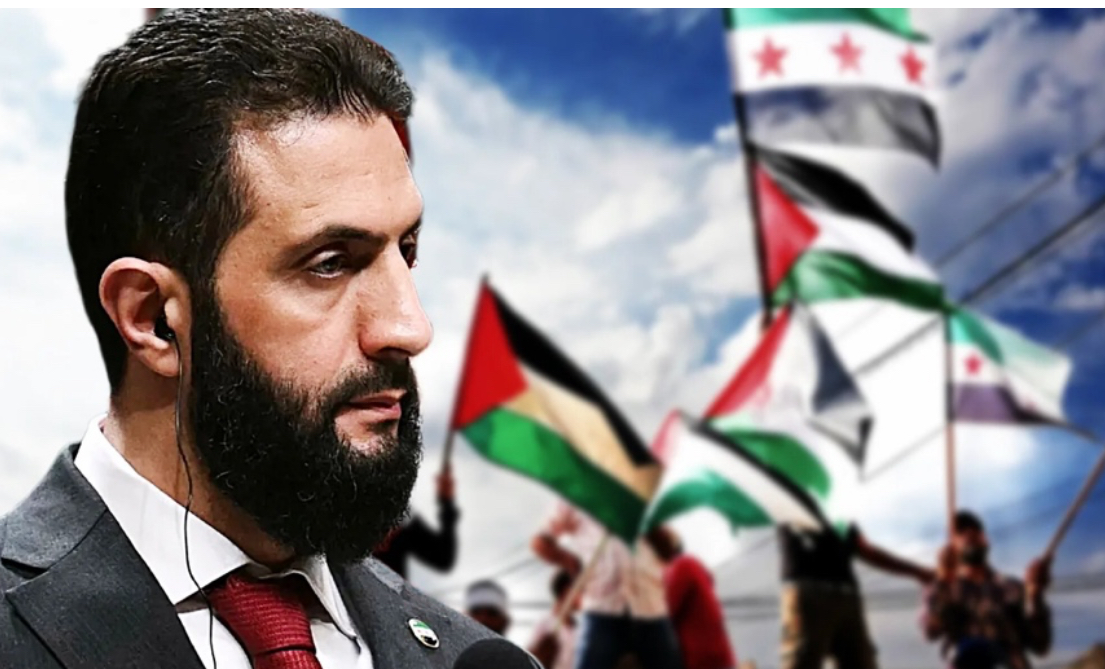
Recent developments in Syria provide some reasons for optimism, despite the such kind of optimism met withscepticism in realpolitik and geopolitics. Under the new leadership of Ahmad Al-Shara, also known previously as Abu Mohamed Al-Jolani, Syria has started to make positive strides in state-building and recovery just six months after Bashar al-Assad fled the country on December 8, 2024. Although Al-Shara was not an elected president, he has formed a government and established a temporary constitution to guide the state of affairs. As a result, a semblance of stability has returned to the country, albeit with caution.
Legacy
Nevertheless, it is essential to acknowledge the lasting impact of Assad’s 54 years of authoritarian rule, which relied on manipulating sectarian differences, creating a fragmented society, and establishing a brutal police state. This legacy has left civil society demoralized and lifeless. For half a century, both Hafez and Bashar al-Assad were portrayed as nearly god-like figures, instilling in the population the belief that they had no choice but to live under Assad’s regime or face chaos.
The regime’s notorious prisons were tools of oppression, leading to many arrests, disappearances, and suffering or death within these facilities. Consequently, Syria is characterized by deep mistrust and fear among its communities, a situation exacerbated by the civil war, which intensified sectarian divisions to an irreversible extent. Given these realities, experts on Syrian politics, including Charles Lister, suggest that the current positive developments should be viewed as merely the beginning of a long and complex journey. In a recent interview, Lister likened it to the first page of a 500-page book.
HTS: From Jihad to Politics
Before delving into the evolving dynamics of Syria, it’s important to note that Bashar al-Assad was toppled by a successful counteroffensive led by Abu Mohamed Al-Jolani and his group, Haya’t Tahrir al-Sham (HTS). HTS is widely recognized as a designated terrorist organization, and the U.S. had even announced a $10 million bounty for Al-Jolani’s capture. This raises a compelling question: how did a recognized global terrorist group, Haya’t Tahrir al-Sham, and its leader, Al-Jolani—previously an operative with ISIS—transition into a pragmatic political actor seemingly overnight?
Consequently, many countries, including some Arab and European nations, have been reluctant to engage with HTS despite its role in the ousting of Assad. However, keen observers of Syrian political developments emphasize that this is not an overnight transition but rather a long-term evolution. They point out that although al-Jolani joined Islamic State of Iraq in late 2000, he later rejected them and embraced al-Qaida, forming a new Syrian affiliate, Jabhat al-Nusra, in 2012. Since 2015, al-Jolani has become a notably pragmatic actor.
This pragmatism is evident in his decision to withdraw allegiance to al-Qaida when Syrian opposition rebel groups demanded it to be included in a unified front against Assad. As a result, he launched a new rebel group, Haya’tTahrir al-Sham, or the Movement for the Liberation of Syria, noting that his project is to liberate Syrians from Assad’s dictatorship, not to challenge or fight any other country or group. Even during his time with al-Qaida, al-Jolani refused to carry out attacks on other opposition rebel groups, when requested by al-Qaida leadership.
He argued that such actions would weaken the overall opposition’s fight against tyranny.HTS’s pragmatism evolved to a new level when the movement took control of the last remaining rebel-held territory in northwestern Syria, specifically in Idlib province. In governing this area, HTS had to navigate relationships with various factions that held different ideological views, as well as with civil society. They needed to ensure the support of the local population; otherwise, the residents might ally with the regime to overthrow HTS.
Furthermore, HTS had to reach out to foreign countries to facilitate aid and assistance to Idlib, which forced them to negotiate terms and accept the demands of these nations. These complex dynamics transformed HTS into a pragmatic political actor rather than a radical jihadist group. This does not mean that HTS has transformed into a moderate political group that opposes violence. Instead, HTS characterized itself as a middle force, combining armed struggle with political pragmatism and diplomacy. Despite these developments, critics argue that HTS does not promote democracy; rather, its actions in Idlib have been marked by authoritarianism and ideological indoctrination.
Fragmentation
As we analyse the post-Assad dynamics, particularly following the Hay’at Tahrir al-Sham (HTS) transition from Idlib to Damascus as the new leaders of the country, we observe existential and complex challenges that exceed the capacity of the central government. The primary issue concerns the struggle to maintain national unity amid growing threats of disintegration and chaos. In the western coastal regions of Syria, such as Latakia and Tartus-which were once strongholds of Assad’s support among the Alawite community- his loyalists and militias continue to operate clandestinely among the population.
They periodically launch attacks on government forces, attempting to undermine the regime’s stability. These militias are encouraging Alawites not to support the regime but to mobilize their resources against the central government. In northwestern Syria, the Syrian Democratic Forces (SDF), which are Kurdish-backed, currently control about one-third of the country, including valuable oil-rich areas. The central government totally lacks power or control over these forces. In the deep southern region, particularly in Suwaida, more than 30 Druze militiagroups that benefited from previous regimes are also attempting to restrain the new government’s reach in order to maintain their unchecked power.
Using the minority rights card, some leaders within the Druze community have even claimed that they are being attacked by the Sunni regime and have called on Israel to intervene. It is equally alarming that terrorist groups affiliated with the Islamic State have been attempting to reorganize in the power vacuums present in some rural areas of the country. In addition to these internal issues related to stability and integration, two external forces are actively working to jeopardize the situation in Syria: Israel and Hezbollah.
The current far-right Israeli government’s stance is that it’s security depends on keeping Syria divided, fragmented, and weak. As a result, Israel consistently targets strategically important locations and air force facilities in Syria while also attempting to occupy southern regions. The Israeli regime appears to be anticipating a counter-offensive from the Syrian regime to justify its attacks. The only factor that restrains Israel’s actions within its Syrian borders is Turkey.
In addition to Israel, Hezbollah also—in a limited capacity—operates within Syrian territory, targeting government officials and forces to create space for its operatives to infiltrate and respond to recent developments. In addition to these security challenges, the new government’s greatest issue is to lay a foundation for a stable economy, as the country’s economic infrastructure has been totally decimated and collapsed.
Grand Strategies
In addressing the challenges facing Syria, al-Shara has made several strategic choices to effectively manage the transition period. Firstly, he believes that fostering social solidarity and mutual engagement among various communities, including minorities, is essential for rebuilding trust among Syrians. This trust had eroded prior to and during the civil war. He understands that policies based on majoritarianism and revenge could destabilize the country and potentially lead to another civil war.
Therefore, it aims to reach out to all ethnic communities to convey the message that the new government will represent everyone, regardless of their differences. The composition of the new government reflects this policy, with ministers appointed to create a balance among government loyalists, technocrats, and representatives from ethno-religious minorities. He maintains that Assad’s authoritarianism affected all Syrians, regardless of their ethno-religious backgrounds. Thus, it considers it their responsibility to ensure representation for everyone. Secondly, al-Shara aims to demonstrate through his foreign policy manoeuvres that a post-Assad Syria will not challenge or undermine the established norms of the global order, nor the aspirations of the international and regional community.
He insists that his policies will be ‘rational’, focusing on mutual interests rather than ideology. Regionally, al-Shara seeks to ensure that the new Syria acts responsibly to protect the interests of the Arab world, strengthening relationships with Saudi Arabia, Qatar, and the United Arab Emirates. He recognizes that Syria’s international reputation is vital for the country’s reconstruction. Without a favourable perception, there is a significant risk of interference from both regional and international actors, which could destabilize the nation.
Thirdly, to neutralize non-state armed groups, al-Shara employs two distinct strategies. In the case of the Syrian Democratic Forces (SDF), currently the most organized armed group in Syria, the new government has sought to establish mutual understanding through mediation by the United States, aiming to integrate the SDF into the national army. In the deep south, he has pursued potential agreements with armed groups willing to integrate into the state, encouraging them, alongside state-controlled armed forces, to combat non-state armed groups that were previously loyal to Assad.
Additionally, the new government has launched a significant campaign to engage with community and religious leaders from the Druze minority community, who wish to maintain the territorial integrity of Syria, in order to isolate separatist groups. An analysis of al-Shara’s the calculated steps shows that the new regime aims to avoid creating a hostile environment that would provide pretext for any non-state armed groups effectively challenging the government.
Prospects
Finally, the million-dollar question is whether the new leadership in Syria will be able to meet expectations and position the country in a new paradigm. To achieve this, there are several important considerations that al-Shara and his government should take into account moving forward.
Firstly, the government should establish a new reliable/ transparent system to deliver transitional justice to the individuals affected by 54 years of brutal police state rule. Particularly in the last 15 years, millions of people have disappeared into Assad’s prison system and have been killed due to the regime’s indiscriminate bombings. The public is eagerly awaiting justice. If the government treats the issue of transitional justice as a low priority or fails to handle it professionally, there is a significant risk that people may take the law into their own hands.
This could lead to violent campaigns against minority groups, as certain minorities are viewed as loyalists to Assad. Secondly, the U.S. has recently lifted certain sanctions on Syria under specific conditions, marking a significant opportunity for the country to revive its economy. However, meeting these conditions poses another important challenge for the current government. Based on these conditions, it appears that the government will need to develop a strategy to address them. Many of these conditions are particularly related to the territorial integrity of the country, such as fighting ISIS and expelling foreign militias. One sensitive condition involves establishing diplomatic relations with Israel under the Abraham Accords. Al-Shara has verbally agreed to this condition, believing it could deter Israel from further fuelling a narrative that the new regime threatens its national security.
The third important aspect is that al-Shara must carefully manage and balance the competing geopolitical interests of the US, Turkey, and the Gulf states regarding Syria. So far, all of these parties have been cooperating in a unified direction. However, we cannot predict the future, and al-Shara’s ability to restore stability to the country will largely depend on his capability to navigate these geopolitical interests effectively. As an overall note, recent developments in Syria are highly significant given the increasing uncertainties in Yemen, Sudan, and the ongoing genocide in Gaza.***
(The writer, Dr. Mohamed Fouz Mohamed Zacky is affiliated with the Department of Political Science and Madani Studies at AbdulHamid AbuSulayman Kulliyyah of Islamic Revealed Knowledge and Human Sciences (AHAS KIRKHS) of the International Islamic University Malaysia. These are his own views that do not represent IIUMToday’s.)

- Knowledge Transfer on Stingless Beekeeping and Downstream Product to Empower the Communities - August 3, 2026
- Growing Together: How IIUM and Kebun Bandar Sungai Bunus Cultivate More Than Just Green Spaces - August 3, 2026
- Khalifah Nisa’: Reclaiming Women’s Role as Guardians of Creation - August 3, 2026