By, Muhamad Ukasyah b. Mohamad Kamarudin
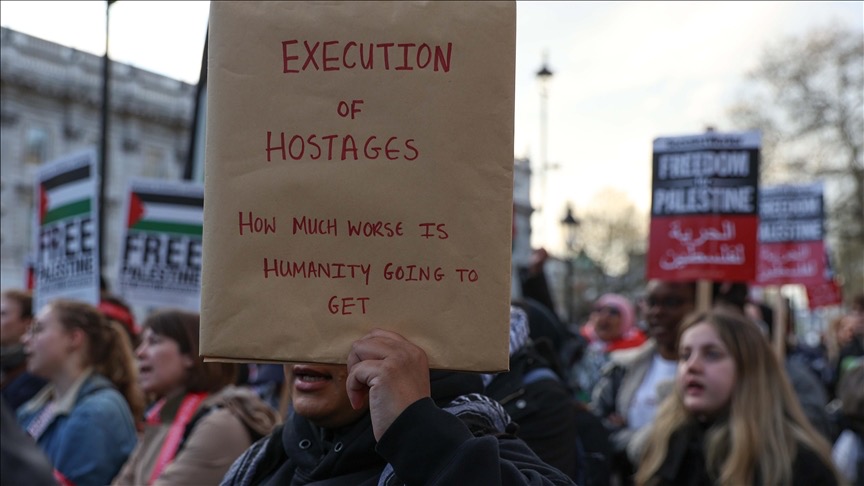
The Zionist Israeli establishment has been accused of advancing legislative measures that effectively legitimize acts amounting to genocide against innocent Palestinian civilians. The passage of such a law through parliamentary approval, supported by a majority vote, reflects a level of moral corruption that defies basic human reasoning. Even more disturbing is the celebratory response surrounding its approval, as if such a development represents a long-awaited triumph rather than a grave ethical failure.
This situation exposes a deeper crisis within the global moral order. The very groups and institutions that have long championed the banner of human rights appear conspicuously absent in the face of such allegations. The inconsistency is striking: principles of justice and human dignity are often upheld when they align with particular interests, yet neglected when applied to others. This selective moral engagement has contributed to a world that seems increasingly desensitized to injustice unfolding in plain sight.
From the perspective of Tawhidic Epistemology, which anchors knowledge and judgment in the oneness and sovereignty of God, such moral inconsistency represents a profound deviation from truth. Justice is not relative, nor is it subject to political convenience; it is an absolute value rooted in divine command. As stated in the Qur’an:
“O you who believe! Stand out firmly for justice, as witnesses to Allah, even if it be against yourselves or parents and relatives.” (Surah An-Nisa’, 4:135)
This verse underscores the uncompromising nature of justice in Islam—one that transcends personal interest, national allegiance, and ideological bias.
At the same time, the concept of Ummatic Excellence demands more than intellectual acknowledgment or spiritual reflection. It calls for active engagement (harakah) in upholding truth and resisting oppression in an unjust world. The Muslim community is not only expected to understand injustice but to respond to it with unity, clarity, and principled action. History reminds us that even in moments of extreme vulnerability, divine power prevails. The story of Prophet Ibrahim AS, who was cast into the fire yet remained unharmed, is a testament to this truth. As the Qur’an narrates:
“We said: ‘O fire, be coolness and safety upon Abraham.’” (Surah Al-Anbiya’, 21:69)
This serves as a powerful reminder that no force, however oppressive, can override the will of Allah.
The ethical responsibility among Muslims is further emphasized in the teachings of the Prophet Muhammad SAW. He said the rights of a Muslim upon another Muslim are six which among these is the simple act of supplication for one another, even in seemingly small matters. Prophet SAW taught that even when a person sneezes, it is a duty to respond with a prayer for mercy and blessings. Such teachings reflect the depth of care and interconnectedness required within the ummah. Similarly, the Prophet SAW stated:
“Removing harmful things from the road is an act of charity.”
If removing a minor obstacle from a pathway is considered among the lowest levels of faith and charity, then the current suffering of Palestinians—who face the loss of life and dignity—demands a far greater moral response. The contrast raises a critical reflection: the standard of faith is not merely symbolic but is measured through action in times of hardship.
Today, what is unfolding in Palestine is not an issue that can be passively observed or treated as fleeting content to be scrolled past and forgotten. It is a matter of life, death, and human dignity. The normalization of such suffering risks eroding the very conscience that defines humanity. Public awareness must evolve into moral urgency, and moral urgency into collective action—through advocacy, prayer, intellectual engagement, and humanitarian support.
The responsibility of witnessing truth in this era carries weight. History will not merely record events; it will reflect the positions taken by those who observed them. For the Muslim ummah, there is a profound belief that justice will ultimately prevail, as promised by Allah. However, that promise does not negate the responsibility of effort. Rather, it demands it.
In a world increasingly shaped by selective narratives and moral compromise, the call today is clear: to reclaim a principled stance rooted in faith, justice, and unwavering solidarity with the oppressed. In a world that chooses silence, we must refuse to fall quiet—for they are not strangers, but our own brothers and sisters in Islam.***
Muhamad Ukasyah BIN Mohamad Kamarudin is a Master’s student from Fiqh and Usul al-Fiqh,
AHAS KIRKHS.

- Knowledge Transfer on Stingless Beekeeping and Downstream Product to Empower the Communities - August 3, 2026
- Growing Together: How IIUM and Kebun Bandar Sungai Bunus Cultivate More Than Just Green Spaces - August 3, 2026
- Khalifah Nisa’: Reclaiming Women’s Role as Guardians of Creation - August 3, 2026