By, Hira Mushtaq
Human development is often understood in terms of physical and material development, technological advancement, and economic growth. However, from an Islamic perspective, true development cannot be reduced to material success alone; rather, it is deeply connected with ethical integrity, spiritual refinement, moral responsibility, and respect for human dignity. Drawing on Dr. Muhammad Mumtaz Ali’s concept of Universal Values, this essay presents an integrated and accessible understanding of human development that refers both to revelation and contemporary realities.
According to Dr. Mumtaz Ali, the Qur’an and Sunnah provide True, Authentic, and Universal Knowledge (TAUK) that is not restricted to Muslims but is meant for all humanity, regardless of race, culture, time, space and geography. the Qur’an and Sunnah present Islam as dīn which means a comprehensive way of life that governs every aspect of life, belief, conduct, knowledge, society, culture, and civilization. Following this framework, the Qur’an and Sunnah also identify some Universal Values such as truthfulness (ṣidq), justice (‘adl), compassion (raḥmah), equality (musāwāt), dignity (karāmah), responsibility (amānah), freedom (ḥurriyyah), accountability (mas’ūliyyah), and fairness (inṣāf) that form the moral foundation of human civilization.
Dr. Mumtaz Ali argues that without these values, societies may achieve scientific and technological progress, yet still suffer from injustice, inequality, moral confusion, and loss of meaning.
Hence, Dr. Mumtaz Ali emphasizes that these universal values which are rooted in divine revelation are indispensable for human development while remaining fully compatible with reason and rational understanding. Because they originate from Allah’s guidance and reflect the realities of human nature, they transcend time, culture, and historical change. Their universality allows people to function within pluralistic societies while providing a stable ethical benchmark beyond cultural relativism. These values are holistic in scope, guiding not only acts of obedience (ibadah) but also social relations, education, politics, economics, and intellectual life.
From this perspective, according to Dr. Mumtaz Ali, true human development is value-centered rather than material-centered. Islam, he says, defines development first as spiritual purification (tazkiyah of mind), moral excellence (development of akhlāq), preservation of human dignity (‘izzah and karāmah), establishment of social justice (‘adl), purposeful knowledge (ilm and ḥikmah), and balance in creation (tawazun/mīzān). For him, a society may be wealthy and technologically advanced, but if it lacks truthfulness, justice, compassion, and moral responsibility, it faces ethical crises and social fragmentation. History illustrates this clearly: before the arrival of the Prophet Muhammad (PBUH) the people of Makkah possessed wealth and trade networks, yet moral corruption and injustice prevailed at that time deprived them as being civilized community. Genuine development emerged only with the arrival of the Prophet Muhammad (PBUH), who restored ethical order, human dignity, and social responsibility. As Dr. Mumtaz Ali insightfully observes, modern humanity often knows more but understands less, highlighting the danger of knowledge detached from values.
The Qur’an and Sunnah place strong emphasis on inner spiritual and moral transformation as the foundation of societal change: “Indeed, Allah will not change the condition of a people until they change what is within themselves” [13:11]. In Dr. Mumtaz Ali’s framework, this inner reform is central to development of an individual, as universal values such as truthfulness, justice, dignity, equality, compassion, and responsibility shape both personal character and collective life. His contribution lies in clearly identifying these foundational values and situating them within a revelation-based worldview that challenges materialistic definitions of development and progress.
From an analytical point of view, this value-centered vision also points toward areas that require further scholarly work and practical development. While Dr. Mumtaz Ali successfully explains what values should guide human development, the question of how these values can be systematically applied in rapidly changing contemporary contexts such as artificial intelligence, environmental crisis, need for sustainability, biotechnology, and global governance remains an open field for further exploration. Similarly, when development is defined in ethical and moral terms, it becomes necessary to develop tools through which moral growth, social harmony, and human dignity can be observed, assessed, and compared across societies. These points do not function as rejection or negation of his framework; rather, they indicate constructive areas where his moral vision can be strengthened and extended.
In response to this analytical space, this essay proposes three interrelated dimensions of individual development that build upon Dr. Mumtaz Ali’s universal values while addressing contemporary needs. The first is development as moral transformation of individuals and society. Contemporary research in psychology and education supports the Qur’anic emphasis on inner change, showing that moral education and value-based learning reduce crime, antisocial behavior, and social conflict while increasing empathy and social responsibility. To make this transformation observable, moral development can be measured through scientific tools such as the Value Development Profile (VDP), which capture changes in how people think, feel, and act morally. By making ethical growth measurable, moral development becomes a tangible and assessable indicator of human development.
The second dimension of development is balance with the Earth, grounded in the Qur’anic principle of mīzān: “He established the balance, so that you may not transgress the balance” [55:7–8]. Dr. Mumtaz Ali’s emphasis on universal responsibility resonates strongly with this ecological ethic. Modern environmental science confirms that imbalance through deforestation, pollution, climate change, and excessive waste harms ecosystems and human health. The Qur’an further states, “We made from water every living thing” [21:30], highlighting the importance and necessity of natural resources. To translate this ethical responsibility into contemporary development terms, ecological balance can be assessed through indicators such as the Harmony Development Index (HDI), which evaluates development not only through economic or technological growth but also through sustainability and environmental preservation.
The third dimension of development is understood as dignity-centered social development. Human dignity occupies a central place in Dr. Mumtaz Ali’s universal values, rooted in the Qur’anic declaration: “We have honored the children of Adam” [17:70]. Social and health sciences support this principle by showing that societies which protect dignity, equality, and inclusion achieve stronger outcomes in education, mental health, well-being, productivity, and social cohesion. To operationalize this value in development discourse, this essay proposes a Dignity Index as a complementary metric of development, like Gross Domestic Product (GDP) or the Human Development Index, the Dignity Index measures how effectively a society respects, empowers, and protects the dignity of its people, thereby integrating ethical, social, and moral dimensions alongside material advancement.
Together, these three dimensions of development, moral transformation, ecological balance, and dignity-centered social systems demonstrate how Dr. Mumtaz Ali’s universal values can be extended into practical, measurable, and scientifically informed models of human development through the process of integrated and holistic system of education. They also open space for constructive dialogue with global frameworks such as sustainability goals and human rights standards, without compromising the Islamic moral foundation of the concept.
Overall, proper thinking for human development through the lens of universal values offers a meaningful alternative to purely material models of development. True concept of development emerges when moral integrity, spiritual awareness, human dignity, social justice, and ecological balance guide knowledge, education, and advancement. By integrating the Qur’anic guidance with scientific understanding and observable social outcomes, Dr. Mumtaz Ali’s concept of universal values presents a comprehensive and humane vision of development that is both timeless and relevant to the challenges of the modern world.
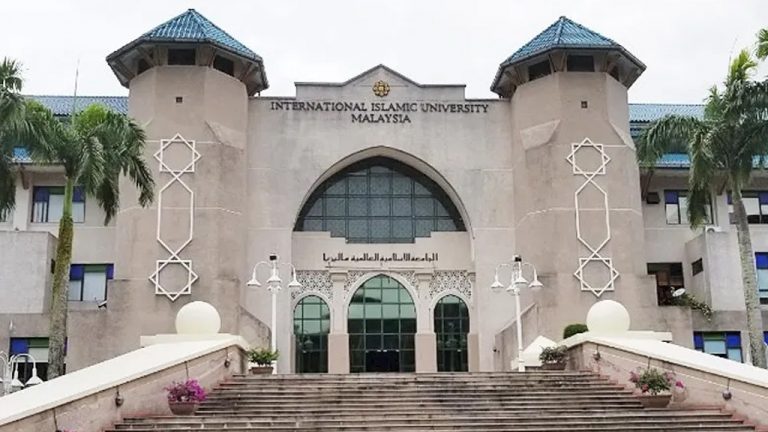
Professor Dr. Muhammad Mumtaz is a senior scholar at the International Islamic University Malaysia and a leading authority on Islamic thought and the Islamization of Knowledge. His scholarly work primarily addresses epistemology, philosophy of science, modernity, and civilizational discourse from an Islamic perspective. His major works include Issues in Islamization of Human Knowledge, which examines contemporary Muslim intellectual approaches to civilization building; The Islamization of Modern Science and Its Philosophy, a critical assessment of modern scientific epistemology; and Islamic Research: Theory, Methodology and Thesis Writing, which articulates an Islamic framework for research methodology. His other books—Islam and the Western Philosophy of Knowledge, The Philosophy of Science: Western and Islamic Perspectives, Islamic Critical Thinking, The Failure of Modernity and the Development of Contemporary Islamic Revivalist Discourse, The History and Philosophy of Islamization of Knowledge, and The Clash of Civilizations or Civilizational Peaceful Co-Existence—collectively critique modernity and advance Islamic alternatives in knowledge, ethics, and civilization. Across these works, he consistently emphasizes the concept of “Universal Values” as a foundational principle for knowledge, morality, and peaceful civilizational coexistence.***
Hira Mushtaq is a research scholar from department of Usul al-Din, Comparative Religion, and Philosophy, AHAS KIRKHS, IIUM.

- Knowledge Transfer on Stingless Beekeeping and Downstream Product to Empower the Communities - August 3, 2026
- Growing Together: How IIUM and Kebun Bandar Sungai Bunus Cultivate More Than Just Green Spaces - August 3, 2026
- Khalifah Nisa’: Reclaiming Women’s Role as Guardians of Creation - August 3, 2026