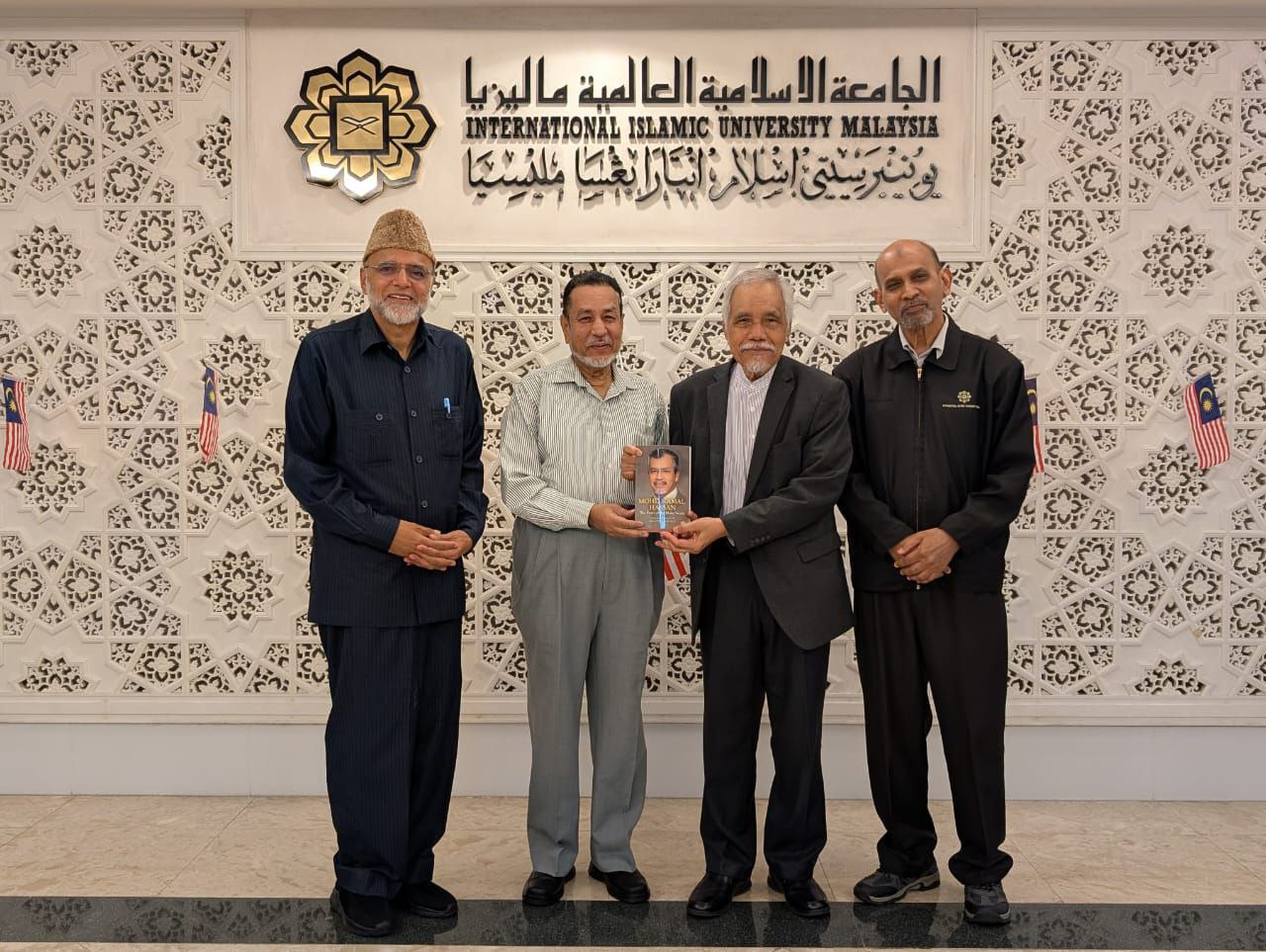
By, Mohd Mumtaz Ali and Abbas Abdul Razak
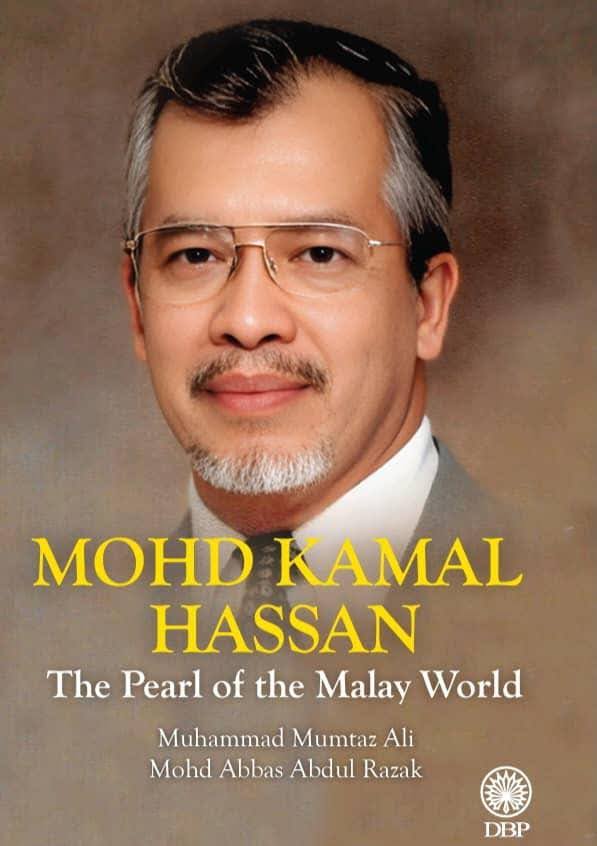
In August 2025, students and academics at the International Islamic University Malaysia witnessed the publication of a new book on the late Professor Mohd Kamal Hassan. As the authors, our intention in producing this humble work was not driven by grand ambitions, but by a deep sense of gratitude—an effort to honour a great scholar, thinker, and the main conceptualizer of IIUM.
While others have written and will continue to write about him, we wished to contribute to the growing body of literature on this towering figure in the Malay world in our own way. As a tribute to his life and contributions, we titled the book Mohd Kamal Hassan: The Pearl of the Malay World. Dewan Bahasa dan Pustaka, which was very much interested in the subject matter of the book, became the official publisher.
The term ‘pearl’ was chosen to analogically represent his brilliance and character. Like the lustre of a pearl, Kamal Hassan’s ideas shone brightly, capturing the attention of intellectuals and students alike. Just as a pearl forms deep within the ocean, his intellectual legacy emerged from years of deep scholarship and contemplation. His work not only enlightened minds but also led to the conceptualization of the first Islamic university in Malaysia.
What made his vision distinct was its eclectic nature—a synthesis of the intellectual traditions of both East and West. His model for an Islamic university was rooted in the rich heritage of the Muslim world, while also incorporating elements of Western civilization, which he regarded as part of the lost legacy of Muslim contributions to human knowledge. A great admirer of the Muslim poet-philosopher Muhammad Iqbal (1877–1938), his approach to conceptualizing ideas involved making them relevant to the contemporary world—a thoughtful blend of insights drawn from both classical and modern eras.
The Dawn of the First Islamic University in Malaysia
In the 1980s, Islamic scholar Mohd Kamal Hassan was tasked by the then-Malaysian Prime Minister to prepare a concept paper for the establishment of the International Islamic University in Malaysia (IIUM). Kamal Hassan, known for his balanced and comprehensive understanding of Islam, conceptualized and helped establish IIUM, providing it with a strong philosophical, epistemological, and ideological foundation.
His vision of Islam as a holistic way of life shaped the university’s mission and direction, promoting peace and harmony within the Muslim community and the world. Kamal Hassan remained deeply involved in the university’s development throughout his life, until his passing in 2023.
As an intellectual architect, he emphasized the importance of a sound spiritual and moral foundation in education, considering these elements vital for personal development alongside academic growth. His collaboration with AbdulHamid AbuSulayman, IIUM’s second rector, further solidified the university’s unique position in higher education.
Kamal Hassan’s views on the role of spirituality in education, his holistic approach to student development, and the lasting impact of his work in shaping IIUM’s identity as a beacon of Islamic education continue to resonate.
How Kamal Hassan Viewed the Muslim World
Through the establishment of IIUM, he demonstrated his readiness to engage with the contemporary world and spent a good part of his intellectual life on civilizational dialogue and development. Throughout his intellectual career, he advocated for change and development to the existing conditions of life and society.
As a man who was not satiated with the status quo of the Muslim world, he aspired to witness transformational change around him and elsewhere in the world. He was a visionary leader who believed in one humanity that lives in mutual peaceful coexistence and harmony. He contributed tremendously to this purpose through his intellectual contributions, which played a significant role in proposing change and development in the educational system.
He realised that without changing the existing educational system, the course of the intellectual history of the Muslim Ummah cannot be changed in the contemporary world. We, therefore, find in the writings of Kamal Hassan a genuine and practical framework for the scheme of change and development of the existing system of education, both modern and traditional.
He contended that without introducing change in the educational system, the condition of the Ummah would remain in the same pathetic state as when it first gained independence from the colonial masters. For him, a mere imitation of Western ideas for development and progress should not be the path for the Ummah to take.
In his view, we can borrow ideas from others, but as Muslim leaders and scholars, we must put those ideas to the acid test—to sieve out harmful elements and retain only those ideas from Western philosophy and science that are compatible with the metaphysical framework of our faith as Muslims.
His Ideas on Education
Kamal Hassan mainly focused on education and made several efforts to bring meaningful change based on the Islamic worldview in the existing educational system. For him, the Islamic worldview is not merely a religious one, but more than that—it represents the truth and reality of life and the world.
His conceptualization of the Islamic worldview was based on the study of True, Authentic, and Universal Knowledge (TAUK), generally known as Islamic Revealed Knowledge (IRK), which is embedded in the teachings of the Quran. He concluded that no meaningful change can be introduced or guaranteed in any educational system if it is not based on the True, Authentic, and Universal Worldview (TAUW). Through his research, he found that the Islamic worldview alone fulfils the criteria of being TAUW.
He further argued that for any meaningful change in the educational system, we must begin with the consciousness of spiritual and moral excellence, which are essential dimensions of the Islamic worldview. Hence, he emphasised the spiritual and moral foundation of life, along with the need for other basic but very important dimensions such as ethical (rational) and empirical (scientific) understanding of life and the world.
He conceptualised that there is no other vehicle except the vehicle of education, and he argued for a framework and strategy that could guarantee the achievement of ethical, spiritual, moral, and empirical understanding of life. This was the reason that he not only conceptualized such a framework and strategy but also developed them and worked tirelessly for their implementation.
He genuinely argued that there is no possibility of any meaningful change and development without guaranteeing the development of an integrated and holistic system of education.
Hence, he spent his whole life in the establishment and development of IIUM as an integrated model of higher education. He further realised that to achieve the expected goals through integrated and holistic education, IIUM must adopt the mission of Islamization of Human Knowledge (IOHK).
Interested parties in Kamal Hassan’s ideas of IOHK incorporated them into their curriculum, teachings, and research programs. The IOHK movement, in brief, was launched during the early 1980s to create consciousness among Muslims to approach and study all modern disciplines developed in the Western world from a critical point of view, based on the criteria of IRK and the Islamic worldview.
Hence, during his tenure as the 3rd Rector of IIUM (1999–2006), he included IOHK as the university’s official mission. This was also the reason Kamal Hassan emphasised another important aspect of IOHK—that is, the Islamization of the Self.
Islamization of the Self means to have a profound and deeper understanding of the true meaning of Islam, its worldview, and the process of its application in the time and space context.
To clarify the need for and importance of the Islamization of the Self, he emphasised the model of Ulul al-Albab. He argued that, in an integrated model of the holistic educational system, the role of Ulul al-Albab can be explained, which is a necessity of education. He explained that Ulul al-Albab, as the scholars of true intellection, would be able to investigate both the human and natural phenomena to realise the power of Allah SWT and offer their gratitude to Him.
According to Kamal Hassan, these are the people who are identified in the Quran as the people of real intellection – Ulul al-Albab. For Kamal Hassan, these are the people who will conduct their research in a proper direction and for some higher and noble goals.
Other than the above necessary variables, Kamal Hassan referred to the study and teaching of Islamic or religious sciences from the perspective of relevantization. For him, relevantization refers to the critical examination of all the existing religious sciences which have been developed in the past. No doubt, these sciences had been developed based on IRK, but their examination before their application is necessary. It is necessary, he said, to study them from a critical point of view to determine their usefulness and relevance for our time.
Kamal Hassan used the term relevantization for the critical examination of religious sciences. He asserted that a clear perception of Islam as the worldview and the way of life will urge scholars to approach both the religious sciences and modern disciplines from a critical point of view. It will help to improve them further and make them relevant to our current situation.
He, therefore, emphasised the necessity of a clear perception of Islam, its worldview, and the sustainability of IOHK, along with the Islamization of the Self, as the foundational principles and components of his strategy and framework for the overall change and development of the Ummah.
We take great pleasure in presenting his strategy, framework, and thought for the benefit of the readers who aspire for change, development, and progress in life, society, community, and countries. At this juncture, we would like to humbly state that this study is not conducted from a critical point of view. Our sole intention in undertaking this study is to see the relevance, utility, and usefulness of his thought.
Kamal Hassan’s framework is universal, and his views are people-oriented. All those who stand for change and development and would like to see the world free from crimes, crises, and corruption would benefit from this book. For those interested in Kamal Hassan’s ideas, this book could be a journey to renew their commitment to Islam as the true worldview given by God to humanity.
Final Word
Through this article, we have presented a few glimpses from our latest work on the late Professor Mohd Kamal Hassan. For those who wish to understand the depth and significance of his contributions, we encourage a deeper engagement with the existing scholarly works produced by academics and biographers.
We truly believe that such exploration will lead to a greater appreciation of Professor Kamal’s enduring legacy and his invaluable contributions to Islamic scholarship, education, and thought.
Prof. Mohd Mumtaz Ali is a faculty member at the Department of Usuluddin and Comparative Religion, while Dr. Mohd Abbas Abdul Razak is an academic staff member in the Department of Fundamental & Inter-Disciplinary Studies. Both authors are affiliated with AHAS KIRKHS, at the International Islamic University Malaysia.

- Knowledge Transfer on Stingless Beekeeping and Downstream Product to Empower the Communities - August 3, 2026
- Growing Together: How IIUM and Kebun Bandar Sungai Bunus Cultivate More Than Just Green Spaces - August 3, 2026
- Khalifah Nisa’: Reclaiming Women’s Role as Guardians of Creation - August 3, 2026