By Balqis Radzi
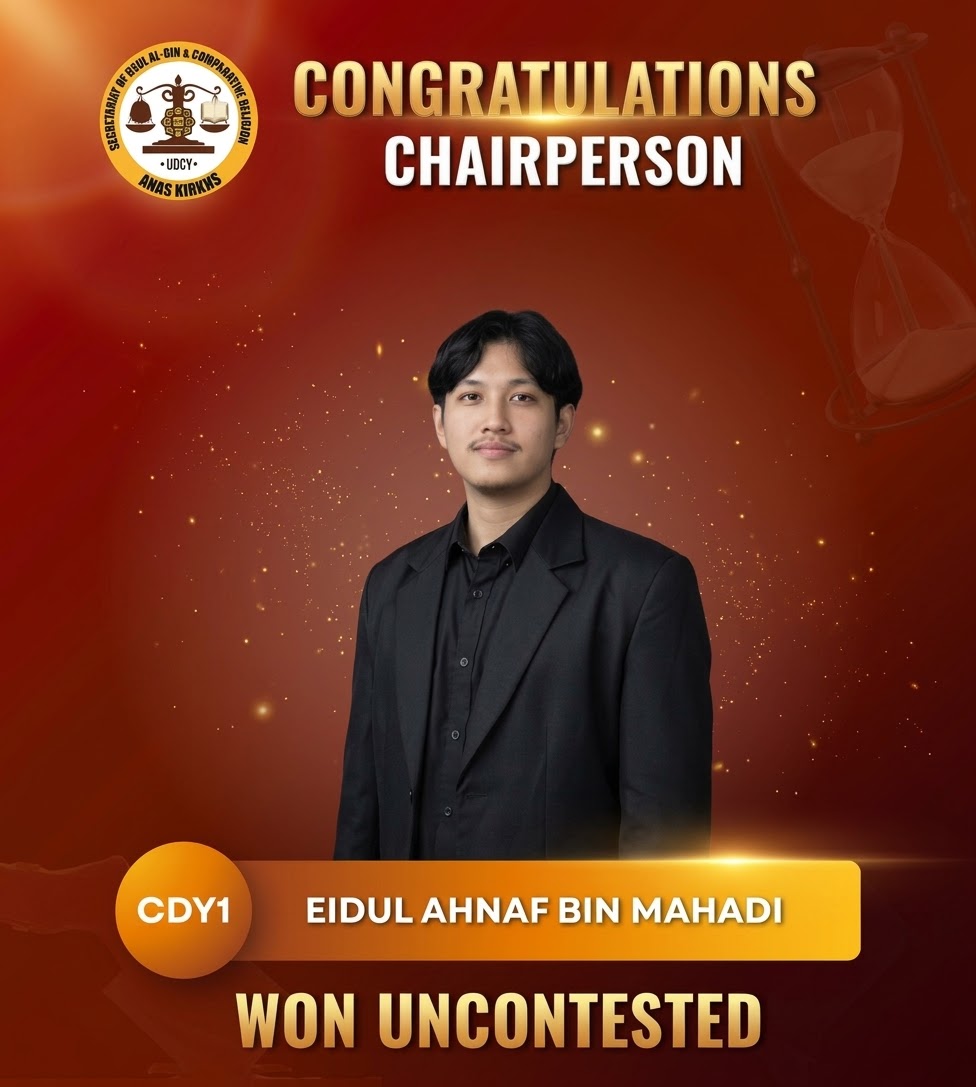
GOMBAK, 11 Nov 2026: The Election Committee announced a new era of leadership for the Kulliyyah-Based Student Societies, including the Secretariat of Usul al-Din and Comparative Religion (UDCY), for the 2026/2027 tenure. Eidul Ahnaf Bin Mahadi was elected unopposed as the new UDCY Chairperson.
His main manifesto focused on eliminating cronyism among former Centre for Foundation Studies (CFS IIUM) students, direct intake students, and international students, as well as increasing the quality and quantity of UDCY programmes and strengthening relationships between students and lecturers within the UDCY community.
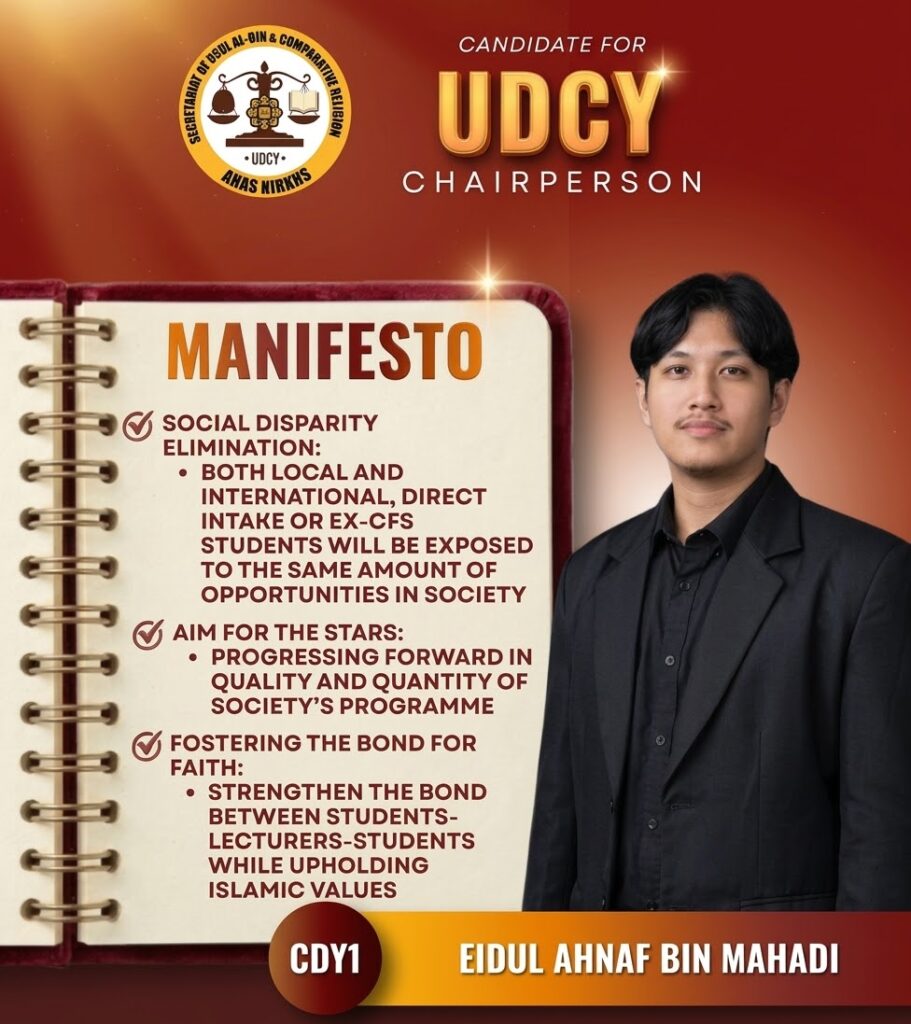
Eidul Ahnaf stepped into the presidential seat with determination on his own. Previously, he served as the Head Assistant of Islamization and Intellectual (ISTECT) Bureau before contesting for the UDCY presidency.
Speaking after the official announcement of the results, he admitted feeling concerned about the responsibilities that come with the position. However, he stated that he viewed his appointment as Allah’s decree and was determined to carry out the responsibility entrusted to him while proving his capability as president.
He also highlighted his plans and priorities for UDCY. One of his key goals is to continue to strengthen the relationship between lecturers and students. He said that this initiative would benefit students academically through lectures, assessments, and examinations; spiritually through the acquisition and practice of deen; socially through support in matters beyond academics; and organisationally through better management of UDCY activities.
He would ensure that his leadership remains accountable and transparent by working closely with the vice-chairperson and the mainboard members. He explained that this would begin with clear communication, detailed instructions, openness to questions, willingness to take responsibility for mistakes, and thorough preparation for every situation.
When discussing cronyism among students, he exclaimed that based on his observations, the issue was not necessarily rooted in discrimination or racism. Rather, students tend to feel more comfortable with those they already know or share similar backgrounds with, which often leads them to remain within familiar social circles.
“Friendship is born from circumstances,” he said.
Thus, he believes that organising more programmes and creating more opportunities for interaction can foster healthy relationships and contribute to reducing cronyism within International Islamic University Malaysia (IIUM). ***
